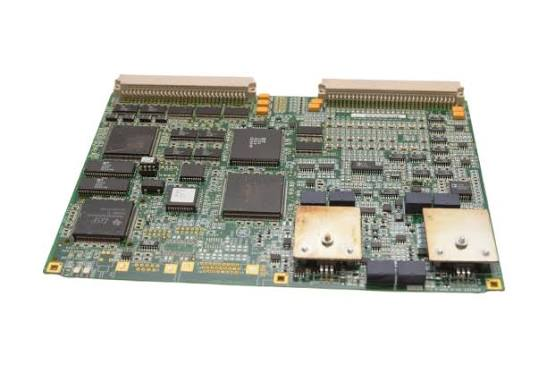
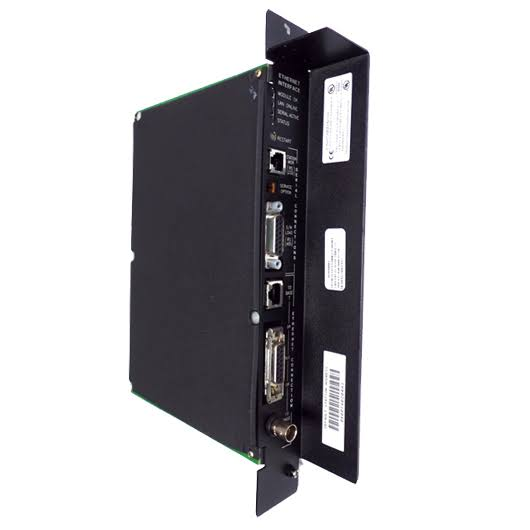
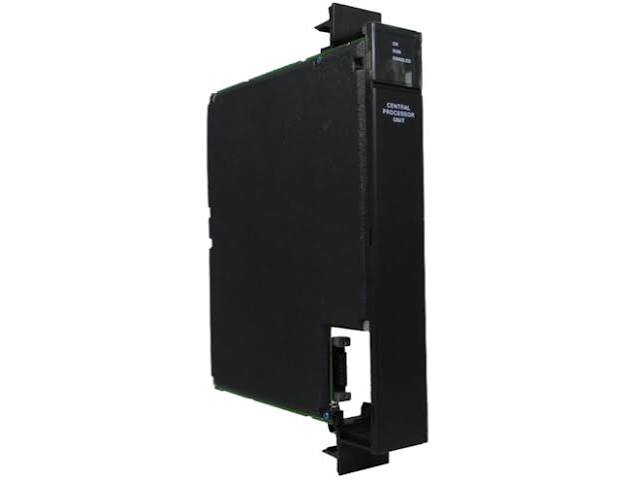
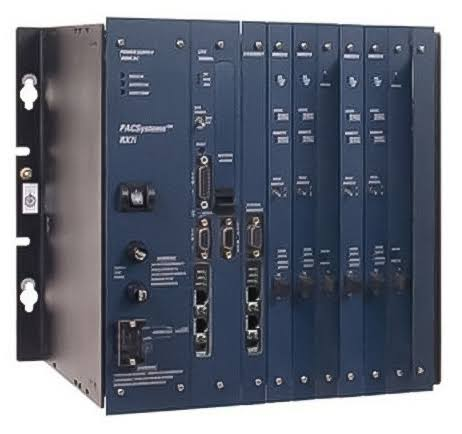
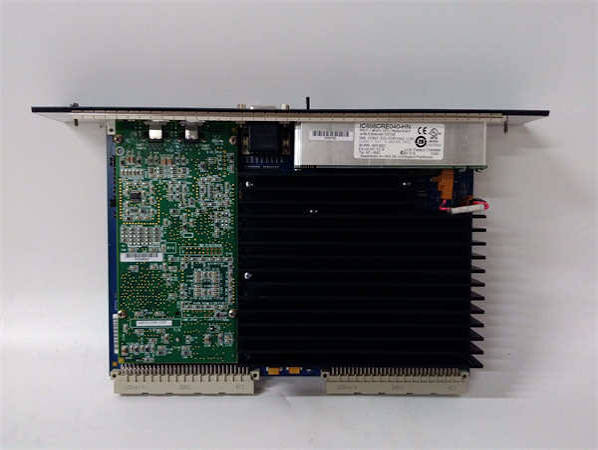
Key Features
-
Multi-Channel High-Precision Acquisition – Supports 16 to 20 differential analog input channels (configuration dependent) with 16-bit A/D conversion and 14-bit effective resolution
-
Flexible Input Configuration – Supports 4–20 mA, 0–20 mA, and ±10 VDC signal types, configurable via jumpers or software
-
Built-In RTD/Thermocouple Linearization Library – On-board sensor characterization library supports RTD and thermocouple linearization without external signal conditioners
-
Redundant Architecture Support – Designed for Simplex and TMR (Triple Modular Redundant) configurations; in TMR mode, signals are distributed across three VME racks
-
Diagnostics & Protection – Channel open/short detection, over-range alarms, ribbon cable link fault detection, and front-panel LED status indicators for run/fault/status
-
Industrial-Grade Protection – Conformal coating for dust, moisture, and corrosion resistance; channel-to-channel isolation prevents ground loop interference
Technical Parameters
Core Advantages
1. Critical Signal Interface for Turbine Protection
The VAIC board resides in the "high-speed sensor interface layer" of the Mark VI control hierarchy, converting field analog signals into digital data transmitted via the VME backplane to the main controller. Its high-precision acquisition capability directly impacts the accuracy of turbine process measurements and the reliability of protection actions.
2. Built-In Sensor Linearization Capability
With an on-board 32-bit floating-point DSP and sensor characterization library, the board performs RTD and thermocouple linearization, square root extraction, and other signal processing tasks, offloading scalar math operations from the main CPU and improving overall system response speed.
3. Flexible Redundant Architecture Support
Supports both Simplex and TMR configurations. In TMR systems, input signals are distributed to three VME racks (T, R, S), each containing an independent VAIC board. If any single VAIC fails, the remaining boards continue providing correct output current, ensuring uninterrupted system operation.
4. High Isolation Rating for System Protection
1500V isolation between channels and from channel to ground effectively prevents ground loop interference and high-voltage transients from damaging sensitive control electronics. This isolation capability is especially critical in complex systems where the 24V battery and ±15V analog supplies share a common ground.
5. Compatibility with Multiple Terminal Boards
Works with TBAIH1C or STAI series terminal boards. One VAIC board can be paired with 1, 2, or 3 TBAI terminal boards, adapting to different application scales.
Applications
The IS200VAICH1D is deployed in critical turbine process monitoring and protection applications:
Recommended Models & Related Products
Important Compatibility Note: The VAIC board cannot operate standalone—it must be paired with a TBAIH1C or STAI terminal board. A full analog loop simulated test is mandatory after replacement. In TMR configurations, all three racks must use the same version to ensure hardware consistency.
What's Included
Note: Terminal board, ribbon cables, field sensors, and configuration software are sold separately.
Why Buy From Us?
-
In Stock – Ready to ship immediately
-
Fully Tested – Each board verified for functionality
-
Warranty Included – Purchase with confidence
-
Technical Support – Compatibility assistance available
Frequently Asked Questions (FAQ)
Q1: What is the GE IS200VAICH1D?
It is a VME Analog Input Board (VAIC) for the GE Speedtronic Mark VI turbine control system. It acquires field analog sensor signals (such as pressure, temperature, flow, and position) and converts them into digital data transmitted via the VME backplane to the main controller.
Q2: What input signal types does this board support?
It supports 4–20 mA, 0–20 mA, and ±10 VDC signal types, configurable via jumpers or software. It also supports RTD and thermocouple signals through the on-board linearization library.
Q3: How many input channels does this board have?
Depending on configuration and source, it supports 16 to 20 differential analog input channels, plus 4 analog output channels.
Q4: Does this board support TMR redundant configurations?
Yes. It is designed for both Simplex and TMR configurations. In TMR mode, signals are distributed to three VME racks (T, R, S), each containing an independent VAIC board. If any single board fails, the remaining boards continue providing correct output.
Q5: Can this board be hot-swapped?
No. The VME rack power must be de-energized before board installation or removal. Hot-swapping can cause arcing, damaging high-density backplane connector pins or internal ADC components.
Q6: What terminal board is required for this module?
It requires a TBAIH1C or STAI series terminal board. One VAIC board can be paired with 1, 2, or 3 TBAI terminal boards, depending on application configuration.
Q7: What is the isolation rating of this board?
It provides 1500V isolation between channels and from channel to ground, effectively preventing ground loop interference and high-voltage transients.
Q8: What is the country of origin?
United States (USA).
Q9: Is this board compatible with Mark VIe systems?
The IS200VAICH1D is a Mark VI (VME architecture) board. Mark VIe systems typically use IS220 series I/O packs; some migration paths are available through dedicated gateways.
Q10: What should I verify before ordering?
Always verify the exact part number (IS200VAICH1D / IS200VAICH1DAB), confirm your system architecture (Simplex or TMR), and check the existing board revision for compatibility.