Key Features
-
Hot Standby (HSB) Redundancy – Two CRU320 CPUs operate in tandem with synchronized logic execution and I/O states; backup takes over automatically upon primary failure
-
1 GHz Celeron-M Processor – High-speed execution for complex control strategies and advanced PID loops
-
64 MB Battery-Backed RAM + 64 MB Flash – Ample memory for large logic programs and data; battery backup preserves contents during power cycles
-
Bumpless Switchover – Maximum 1 logic scan, minimum 3.133 ms; outputs maintain last valid states or move to safe defaults during failover
-
Dual Serial Ports – RS-232 and RS-485 for programming, HMI, and legacy device connectivity
-
ECC Memory Technology – Single-bit error correction and multiple-bit error checking for enhanced data integrity in electrically noisy environments
-
Manual and Automatic Role Switching – Toggle switch for manual transitions; application-initiated role switching supported
-
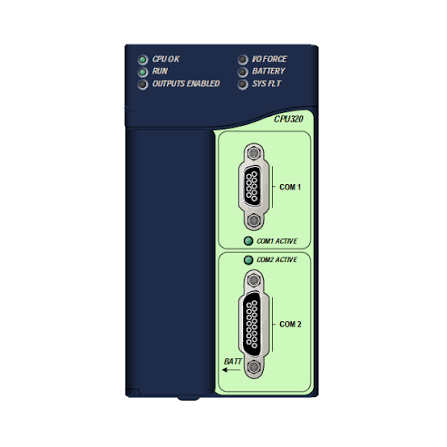
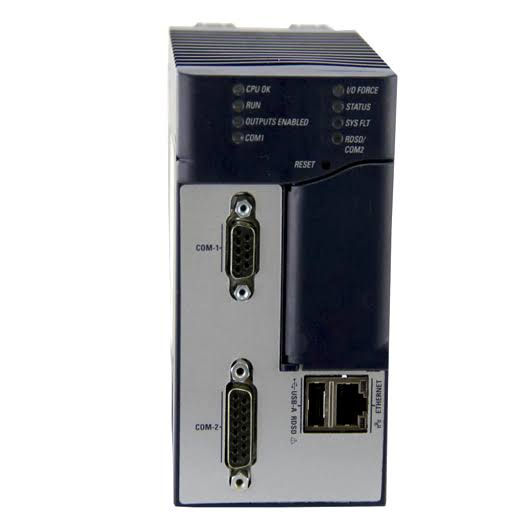
Redundancy Status LEDs – Dedicated indicators for CPU OK, Run, Outputs Enabled, Battery, System Fault, and COM1/COM2 activity
-
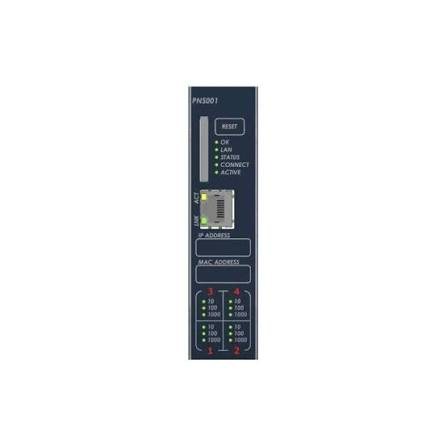
Supports PROFINET and Ethernet Remote I/O – Simplex and redundantly controlled PROFINET remote I/O (firmware version 8.00 or later)
Technical Parameters
Core Advantages
1. True Hot Standby Redundancy with Bumpless Transfer
The IC695CRU320 is purpose-built for high-availability systems where even brief interruptions can cause financial loss or safety hazards. In a redundancy configuration, two CRU320 CPUs (one active, one backup) are synchronized via RMX fiber-optic links. If the active unit fails due to hardware fault, power glitch, or maintenance requirement, the backup takes over within a maximum of one logic scan (minimum 3.133 ms). Critically, the switchover is bumpless: process states, PID loop values, and output states are preserved, avoiding process upsets or quality deviations.
2. ECC Memory for Data Integrity
The CRU320 implements Error Checking and Correction (ECC) memory technology, which automatically detects and corrects single-bit memory errors while checking for multiple-bit errors. In electrically noisy industrial environments where memory corruption could lead to erratic control behavior, ECC provides an essential layer of data integrity protection.
3. Generous Memory for Complex Applications
With 64 MB of battery-backed RAM and 64 MB of non-volatile flash memory, the CRU320 can handle large, complex logic programs without external storage. The battery-backed RAM retains program and data through power cycles, while the flash memory provides a secondary layer of program protection. The module supports auto-located Symbolic Variables that can use any amount of user memory, enabling efficient program organization.
4. Flexible Communication and Integration
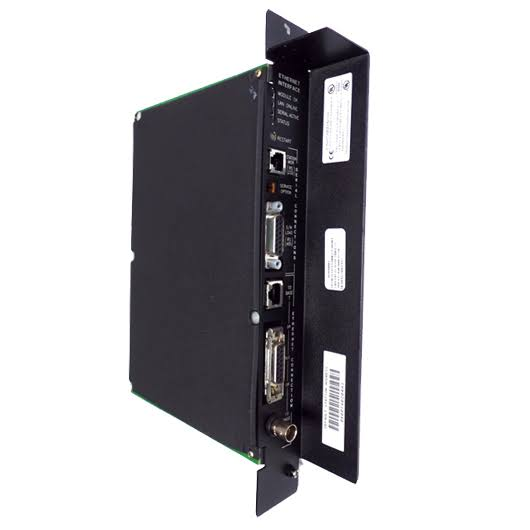
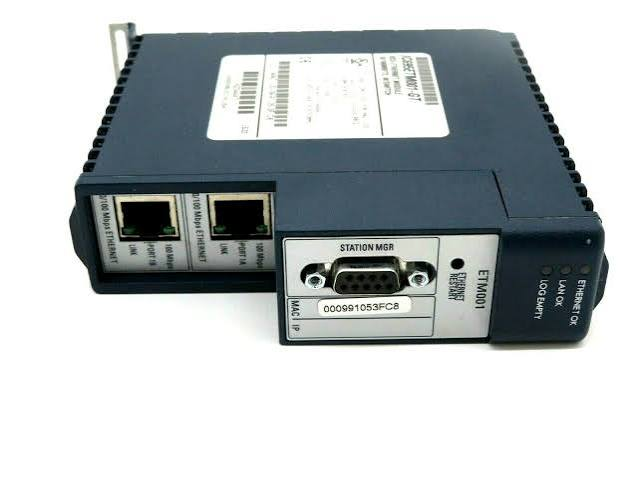
The CRU320 provides dual independent serial ports (RS-232 and RS-485) for direct connection to programmers, HMI devices, and legacy equipment. Ethernet communication is supported via the rack-based IC695ETM001 Ethernet Interface module, enabling SRTP, Modbus TCP, and Ethernet Global Data (EGD) protocols. The module also supports simplex and redundantly controlled PROFINET remote I/O (firmware version 8.00 or later).
5. Seamless Migration from Series 90-30
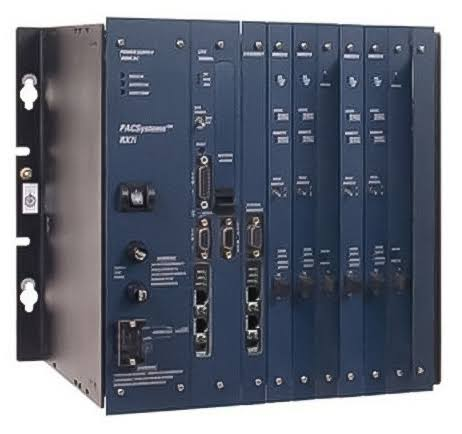
The RX3i architecture's dual backplane bus (PCI 2.2 + high-speed serial) enables the CRU320 to communicate with both modern RX3i I/O modules and legacy Series 90-30 I/O modules. This backward compatibility allows phased migration from older systems without wholesale replacement.
6. Comprehensive Diagnostics and Manual Control
Eight front-panel LEDs provide immediate visual status: CPU OK, Run, Outputs Enabled, I/O Force, Battery, System Fault, COM1, and COM2. The manual toggle switch allows technicians to initiate role switching between active and backup units during maintenance or testing, without relying solely on automatic fault detection.
Applications
The IC695CRU320 is deployed across industries where continuous operation is paramount:
Recommended Models & Related Products
What's Included
Note: RMX synchronization module, battery, power supply, rack, and programming software are sold separately.
Why Buy From Us?
-
In Stock – Ready to ship immediately
-
Fully Tested – Each module verified for functionality
-
Warranty Included – Purchase with confidence
-
Technical Support – Redundancy configuration assistance available
Frequently Asked Questions (FAQ)
Q1: What is the GE Fanuc IC695CRU320?
It is a Redundancy CPU module for the PACSystems RX3i platform. It supports Hot Standby (HSB) redundancy configurations, where a backup CPU takes over control seamlessly if the primary unit fails, enabling high-availability control for mission-critical applications.
Q2: What is the difference between the CRU320 and standard RX3i CPUs?
The CRU320 is specifically designed for redundancy applications. Unlike standard CPUs, it supports dual-CPU hot standby configurations with synchronized logic and I/O states, bumpless switchover, and dedicated RMX fiber-optic synchronization links. Standard CPUs like the CPE310 do not support redundancy.
Q3: How fast is the switchover between redundant CPUs?
The switchover time is maximum 1 logic scan, minimum 3.133 milliseconds. This ensures that even in the event of a primary CPU failure, the process experiences no noticeable interruption.
Q4: Does the CRU320 require a battery?
Yes. The module requires an external battery for memory backup. The recommended battery is the IC695ACC302 Lithium Smart Battery or the IC693ACC302 Series 90-30 Auxiliary Battery. The battery is not included and must be ordered separately.
Q5: What is the RMX module and why is it required?
The IC695RMX128/228 Redundancy Memory Xchange (RMX) module creates high-speed fiber-optic links that mirror memory contents, I/O states, and application data between the active and backup CPUs. Up to two RMX links are supported for redundancy. Without RMX modules, the redundancy system cannot function.
Q6: Can the CRU320 be used as a standalone CPU?
Yes. The CRU320 can operate as a standalone high-performance CPU without redundancy. However, it is most cost-effective when deployed in redundancy pairs for high-availability applications.
Q7: How many program blocks does the CRU320 support?
It supports up to 512 program blocks, with a maximum size of 128 KB per block.
Q8: What communication protocols does the CRU320 support?
Serial protocols include Modbus RTU Slave, SNP, and Serial I/O. Ethernet communications (via the IC695ETM001 module) support SRTP, Modbus TCP, and Ethernet Global Data (EGD). The CPU also supports PROFINET remote I/O (firmware version 8.00 or later).
Q9: How many slots does the CRU320 occupy?
The module occupies two slots in an RX3i rack.
Q10: What is the country of origin?
United States (USA).
Q11: What is the QuadPAC solution?
The RX3i QuadPAC solution utilizes four CRU320QP controllers — one master and three synchronized backups — for triple-redundant I/O rack configurations. It features "Smart Redundancy," a patent-pending algorithm that calculates relative system availability in real time and identifies the most available controller as master.