Key Features
-
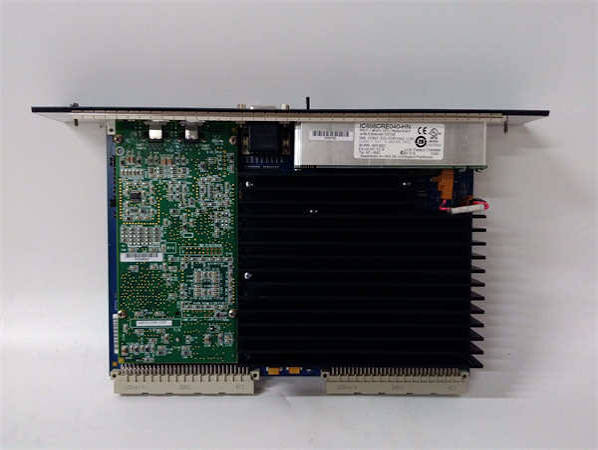
1.8 GHz Pentium-M Processor – High-speed execution with a Boolean scan rate of 0.024 ms per 1,000 contacts/coils
-
64 MB Battery-Backed RAM + 64 MB Flash – Ample memory for large logic programs and data retention
-
Hot Standby (HSB) Redundancy – Two CPUs operate in tandem with synchronized data; backup takes over automatically upon primary failure
-
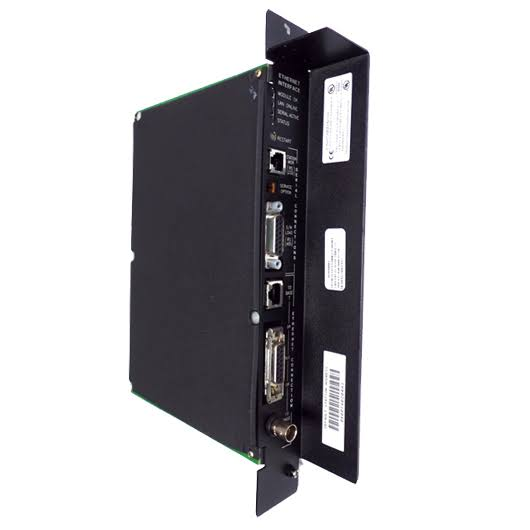
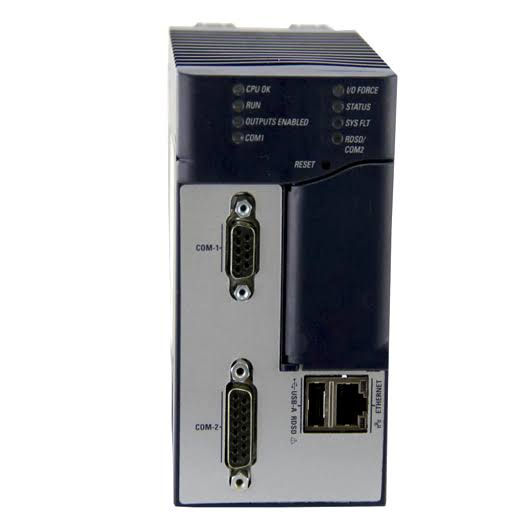
Dual 10/100 Mbps Ethernet Ports – Auto-negotiating RJ45 ports supporting SRTP, Modbus TCP, and EGD protocols
-
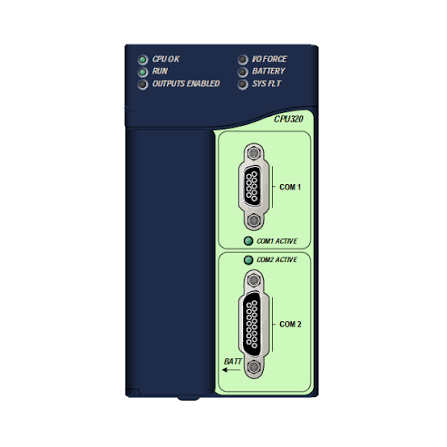
Three Serial Ports – RS-232, RS-485, and a dedicated Station Manager port for diagnostics and legacy device connectivity
-
Web and FTP Server – Up to 16 simultaneous web server and FTP connections for remote monitoring and data retrieval
-
ECC Memory Technology – Error checking and correction for enhanced data integrity in electrically noisy environments
-
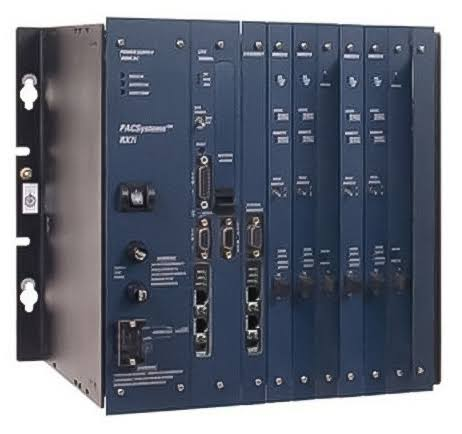
VME64 Backplane – Compatible with RX7i and legacy Series 90-70 I/O modules
Technical Parameters
Core Advantages
1. True Hot Standby Redundancy with Bumpless Transfer
The IC698CRE040 is purpose-built for high-availability systems. In a redundancy configuration, two CRE040 CPUs (one active, one backup) are synchronized via the IC698RMX016 Redundancy Memory Xchange module. If the active unit fails due to hardware fault, power glitch, or maintenance requirement, the backup takes over seamlessly. Process states, PID loop values, and output states are preserved, avoiding process upsets or quality deviations.
2. High-Performance Processing Power
The 1.8 GHz Pentium-M processor delivers a Boolean execution speed of 0.024 milliseconds per 1,000 instructions, making it exceptionally fast for complex control tasks. This performance is essential for demanding applications requiring high-speed logic execution and complex mathematical calculations.
3. Comprehensive Communication Capabilities
With dual Ethernet ports and three serial ports, the CRE040 offers versatile connectivity. The Ethernet interfaces support SRTP for programming, Modbus TCP for third-party system integration, and Ethernet Global Data (EGD) for deterministic peer-to-peer data exchange between controllers. The RS-232 and RS-485 ports support Modbus RTU Slave, SNP, and Serial I/O protocols.
4. Built-in Web and FTP Server
The module includes a built-in web server and FTP server supporting up to 16 simultaneous connections. Users can monitor process variables, access diagnostic data, and retrieve files through standard web browsers without specialized software. This capability simplifies remote monitoring and system diagnostics.
5. Seamless Legacy Integration
The CRE040 uses the VME64 backplane standard, ensuring compatibility with both modern RX7i I/O modules and legacy Series 90-70 discrete and analog I/O modules. This backward compatibility allows phased migration from older systems without wholesale replacement.
6. Robust Program Protection
The module supports password-controlled software access and includes a battery-backed calendar clock. The lithium battery (IC698ACC701) preserves RAM contents and real-time clock during power loss, with low-battery alarm detection alerting operators before battery failure.
Applications
The IC698CRE040 is deployed across industries where continuous operation is paramount:
Recommended Models & Related Products
What's Included
Note: RMX016 synchronization module, battery, power supply, rack, and programming software are sold separately.
Why Buy From Us?
-
In Stock – Ready to ship immediately
-
Fully Tested – Each module verified for functionality
-
Warranty Included – Purchase with confidence
-
Technical Support – Redundancy configuration assistance available
Frequently Asked Questions (FAQ)
Q1: What is the GE Fanuc IC698CRE040?
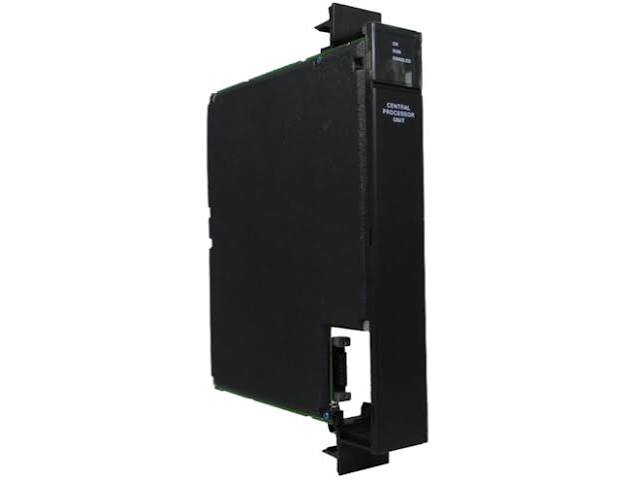
It is a Redundancy CPU module for the PACSystems RX7i platform. It supports Hot Standby (HSB) redundancy configurations, where a backup CPU takes over control seamlessly if the primary unit fails, enabling high-availability control for mission-critical applications.
Q2: What is the difference between the CRE040 and standard RX7i CPUs?
The CRE040 is specifically designed for redundancy applications. Unlike standard CPUs, it supports dual-CPU hot standby configurations with synchronized logic and I/O states, bumpless switchover, and dedicated RMX fiber-optic synchronization links.
Q3: How fast is the switchover between redundant CPUs?
The switchover time is maximum 1 logic scan, ensuring that even in the event of a primary CPU failure, the process experiences no noticeable interruption.
Q4: Does the CRE040 require a battery?
Yes. The module requires an external battery for memory backup. The recommended battery is the IC698ACC701 Lithium Battery. The battery is not included and must be ordered separately.
Q5: What is the RMX module and why is it required?
The IC698RMX016 Redundancy Memory Xchange module creates high-speed fiber-optic links that mirror memory contents, I/O states, and application data between the active and backup CPUs. Without RMX modules, the redundancy system cannot function.
Q6: How much memory does the IC698CRE040 have?
It provides 64 MB of battery-backed user RAM and 64 MB of non-volatile flash memory for program storage.
Q7: What communication protocols does the CRE040 support?
Serial protocols include Modbus RTU Slave, SNP, and Serial I/O. Ethernet communications support SRTP, Modbus TCP Server/Client, and Ethernet Global Data (EGD).
Q8: What is the operating temperature range?
The CPU operates from 0 to 60°C (32 to 140°F).
Q9: Does this CPU support web-based monitoring?
Yes. It includes a built-in web server and FTP server supporting up to 16 simultaneous connections for remote monitoring and data access.