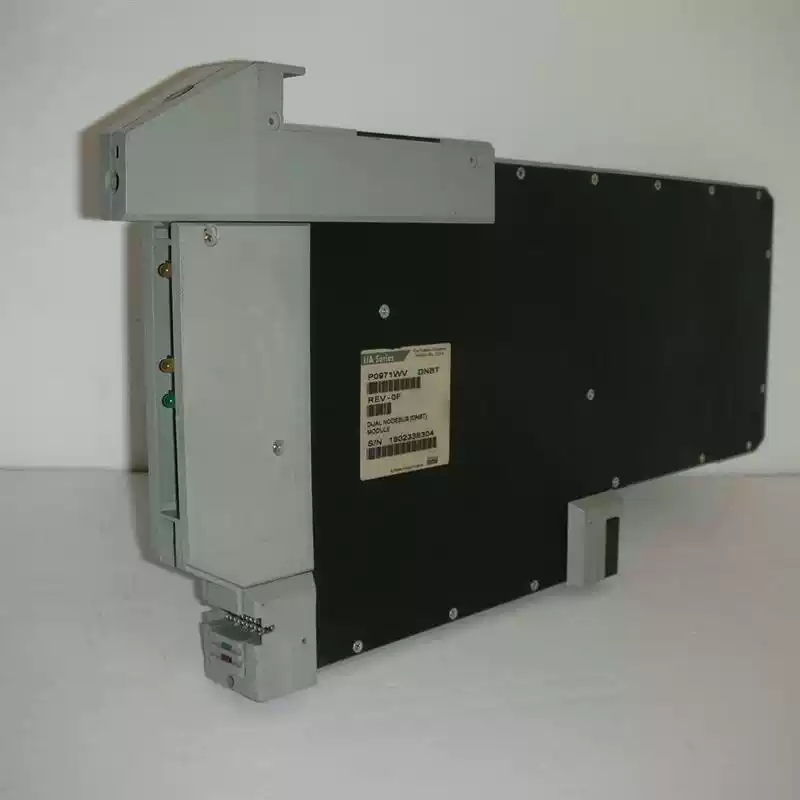
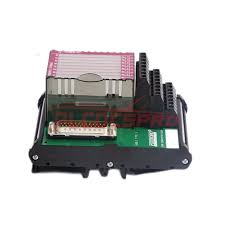
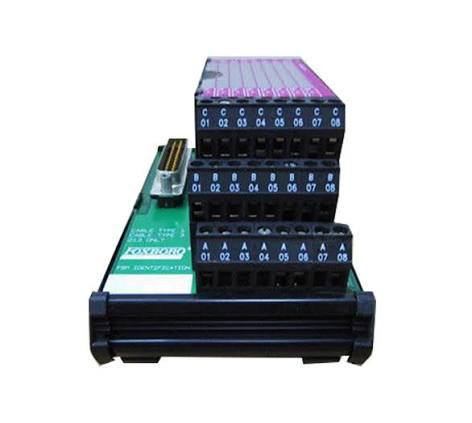
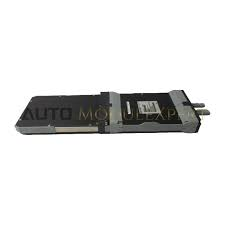
Technical Specifications
Note: The DNBT is functionally similar to the DNBI but transmits data over a single 10Base-T twisted-pair cable instead of separate AUI and RS-423 cables.
Key Features & Benefits
Redundant 10Base-T Communication Path
The DNBT provides dual independent communication paths, ensuring that data transmission continues even if one path fails. Its 10Base-T architecture consolidates signal and control information onto a single shielded twisted-pair cable, reducing wiring complexity while maintaining IEEE 802.3-compliant performance.
Optimized for Modern Processors
Specifically engineered for Model 51, Style E (and later) and 70 Series processors, the DNBT delivers the data rates and reliability required by these advanced control platforms. It enables seamless integration of processor stations into the Nodebus without the cabling overhead of earlier interfaces.
Transparent Electrical Conversion
The module performs only electrical voltage level conversion and signal repeating—it does not interpret or react to data on the signal cable. This transparent operation ensures that the module introduces no latency or protocol distortion, maintaining deterministic communication across the Nodebus.
Rugged Z-Module Construction
Built in the standard Z-module form factor, the DNBT is designed for mounting in I/A Series enclosures and compatible mounting structures (such as the 1x8 mounting structure). It meets Class G3 (Harsh) environmental contamination standards per ISA S71.04, ensuring reliable operation in corrosive and dusty industrial environments.
Hot-Swappable Maintenance
The DNBT supports live replacement on an energized standard I/A Series backplane. Technicians can replace a faulty module without disrupting field wiring, power supply, or backplane communication, minimizing mean time to repair (MTTR) and eliminating unnecessary process downtime.
Built-in Diagnostics
Three front-panel LEDs provide at-a-glance status indication for power, communication activity, and fault conditions, enabling rapid troubleshooting at the cabinet level.
Recommended Related Models
Compatible I/A Series Components:
-
Model 51 Style E (and later) Application Processors
-
Model 51 Application/Workstation Processors
-
70 Series Processors
-
I/A Series 1x8 mounting structures and standard enclosures
Frequently Asked Questions (FAQ)
Q1: What is the primary function of the Foxboro P0971WV DNBT?
The DNBT provides direct interfacing between 50 Series or 70 Series stations and the I/A Series Nodebus. It transmits data over a single 10Base-T shielded twisted-pair cable, enabling redundant, high-integrity communication between control processors and the Nodebus network.
Q2: What type of cable does the DNBT require?
The DNBT requires Category 5, 10Base-T shielded twisted-pair cable compliant with IEEE 802.3. The maximum cabling distance is 91 m (300 ft). This single cable carries both signal and control information, unlike the DNBI which requires separate AUI and RS-423 cables.
Q3: Which processors is the DNBT compatible with?
The DNBT is optimized for Model 51, Style E (and later) processors and 70 Series processors. It can interface 50 Series or 70 Series stations (including Application Processor 51, Application Workstation 51, Workstation Processor 51, Application Workstation 70, and Workstation Processor 70) to the Nodebus.
Q4: Can the DNBT be replaced without shutting down the system?
Yes. The DNBT supports hot-swapping on an energized standard I/A Series backplane. The module can be removed and replaced without disconnecting power or communication cables, provided standard hot-swap rules for the target rack enclosure are followed.
Q5: How does the DNBT differ from the DNBI?
The DNBT is functionally similar to the DNBI, but the key difference is cabling: the DNBT transmits data over a single 10Base-T twisted-pair cable, while the DNBI uses AUI and RS-423 cables. The DNBT is optimized for Model 51, Style E (and later) and 70 Series processors.
Q6: What does the DNBT do with the data it receives?
The DNBT performs only electrical voltage level conversion and signal repeating. It does not interpret or react to data on the associated signal cable—it simply converts and repeats signals transparently, ensuring no protocol distortion or latency is introduced.
Q7: What environmental conditions can the DNBT withstand?
The DNBT is rated for Class G3 (Harsh) environmental contamination per ISA Standard S71.04. Operating temperature is 0°C to +60°C, with storage from -40°C to +70°C. It operates at altitudes up to 3,000 m and humidity levels of 5% to 95% (non-condensing).
Q8: How many LEDs does the P0971WV have and what do they indicate?
The module features 3 LEDs on the front panel, providing status indication for power, communication activity, and fault conditions. These enable quick visual diagnostics at the cabinet level.