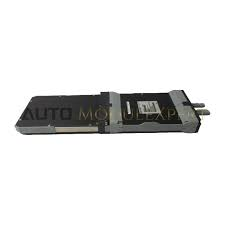
Technical Specifications
Note: Specifications may vary by hardware revision. Always verify compatibility with your specific I/A Series software version.
Key Features & Benefits
Exceptional Processing Power for Demanding Loops
The CP40’s Intel 486DX4 processor at 100 MHz delivers 2000 blocks/second of control processing capability, making it the preferred choice for power plant applications requiring fast and complex control loops . This processing headroom ensures that even the most demanding regulatory and sequential control strategies execute with deterministic timing.
Three Flexible Fieldbus Configurations
The CP40 adapts to virtually any plant topology through three selectable Fieldbus configurations :
-
Local Fieldbus: Up to 10 m within the enclosure, supporting 24 FBMs directly—ideal for compact, cabinet-mounted installations.
-
Twinaxial Fieldbus: Extends up to 1800 m outside the enclosure via twinaxial cable, supporting up to 64 FBMs through Fieldbus isolators—suited for distributed process areas.
-
Fiber Optic Fieldbus: Extends up to 20 km overall, providing complete electrical isolation and immunity to EMI—essential for plant-wide distribution and harsh electrical environments.
Fault-Tolerant Redundancy Architecture
The CP40 supports 1:1 hot standby redundancy, with primary and backup processors running synchronously. If the primary CPU fails, the standby assumes control seamlessly without disrupting the process, ensuring maximum system availability for critical control applications .
Comprehensive Diagnostic Suite
The CP40 includes power-up self-checking, watchdog timer monitoring, and runtime checking to detect and report faults. Diagnostics can also be performed while the processor is offline, enabling thorough troubleshooting without impacting active control .
Wide Application Compatibility
Beyond standard FBM I/O, the CP40 interfaces with multiple subsystems for plant migration and integration :
-
Panel Display Stations: Up to 24 stations, or mixed FBM/PD configurations on the same Fieldbus.
-
Cluster I/O Subsystem: Supports high-density channel applications via FBP10 Fieldbus Processors and FBC cards.
-
SPECTRUM Migration: Integrates with legacy SPECTRUM systems via Fieldbus Processors (FBP) for UCM, FIO, UFM, and UIO subsystems.
-
SPEC 200 Migration: Enables migration of SPEC 200 control to the I/A Series platform.
Recommended Related Models
Compatible I/A Series Components:
-
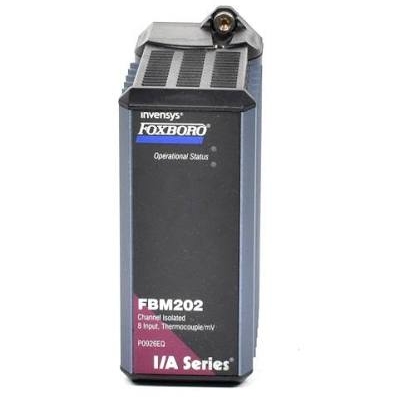
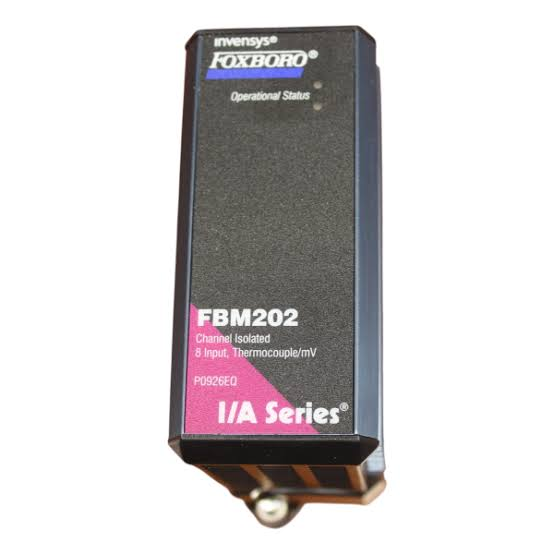
Fieldbus Modules (FBMs): FBM201, FBM202, FBM203, FBM207, FBM242, and others
-
Fieldbus Isolators: Required for twinaxial and fiber optic extended configurations
-
Mid Bus Modems: For configurations exceeding two enclosures or fiber optic repeaters
-
Fieldbus Processors: FBP10 for Cluster I/O subsystem integration
-
Mounting Structures: Standard I/A Series enclosures and AK application racks
Frequently Asked Questions (FAQ)
Q1: What is the primary function of the Foxboro P0960JA CP40?
The CP40 is the central control processor for an I/A Series DCS node. It executes all configured control strategies—PID loops, sequential logic, interlocks, and Boolean functions—while managing communication with Fieldbus Modules (FBMs) over the Fieldbus and with operator workstations via the Nodebus .
Q2: What processor does the CP40 use and how fast is it?
The CP40 is built around an Intel 486DX4 processor running at 100 MHz with 4 MB of memory . It delivers a control processing capability of 2000 blocks per second, making it well-suited for fast-reacting loops in power generation and complex control applications .
Q3: What are the three Fieldbus configurations supported by the CP40?
The CP40 supports Local, Twinaxial, and Fiber Optic Fieldbus configurations :
-
Local: Up to 10 m, 24 FBMs, within the enclosure.
-
Twinaxial: Up to 1800 m, 64 FBMs via isolators, for extended plant distribution.
-
Fiber Optic: Up to 20 km overall, 64 FBMs via isolators, with complete electrical isolation and EMI immunity.
Q4: Does the CP40 support redundant operation?
Yes. The CP40 supports 1:1 hot standby redundancy in fault-tolerant configurations . Primary and backup processors run synchronously; if the primary fails, the standby takes over without process interruption.
Q5: What diagnostic features does the CP40 include?
The CP40 includes power-up self-checking, a watchdog timer, and runtime checking to detect faults . Diagnostics can also be performed while the processor is offline, allowing thorough troubleshooting without affecting active control .
Q6: Can the CP40 interface with legacy systems for plant migration?
Yes. The CP40 supports interfacing with SPECTRUM Migration Integrator subsystems (UCM, FIO, UFM, UIO) via Fieldbus Processors, and with SPEC 200 control systems for migration to the I/A Series platform . This enables phased modernization of legacy control systems.
Q7: How many Panel Display Stations can the CP40 support?
The CP40 can interface up to 24 Panel Display Stations, or a mixed configuration of FBMs and Panel Display Stations on the same Fieldbus. Note that one Panel Display Station counts as two Fieldbus Modules per configuration rules .
Q8: What manual covers the P0960JA CP40?
The P0960JA is documented in Foxboro manual PSS 21H-1B3 B3, which provides detailed specifications, configuration guidelines, and installation instructions for the Control Processor 40 .