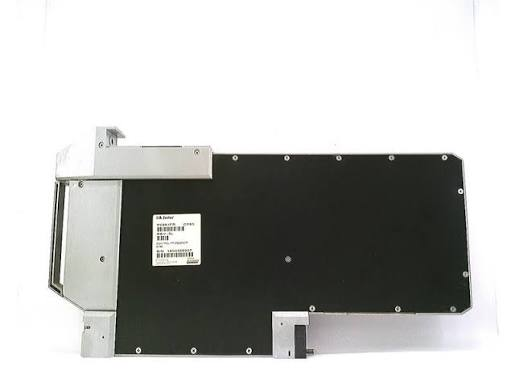
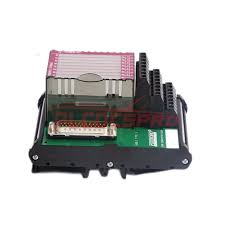
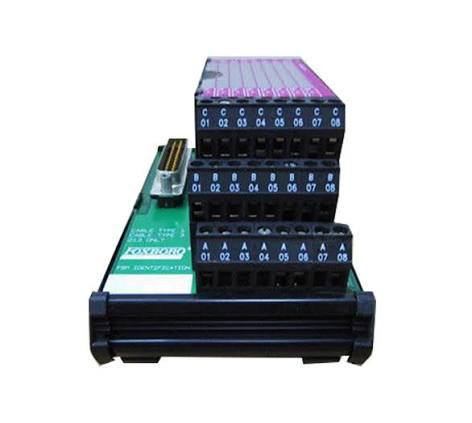
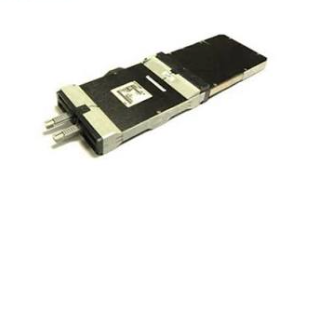
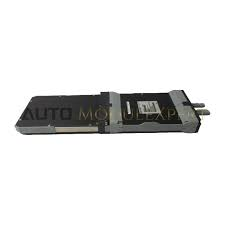
Technical Specifications
Note: Specifications may vary by hardware revision. Always verify compatibility with your specific I/A Series software version and FBM population.
Key Features & Benefits
True Fault-Tolerant Redundancy with Bumpless Failover
The CP60's defining strength is its 1:1 redundant hot standby architecture. In a fault-tolerant configuration, two processor modules operate in parallel, each with independent connections to the Nodebus and Ethernet fieldbus . Both modules receive and process information simultaneously, continuously comparing communication messages at their external interfaces. Upon detecting a fault, both modules run self-diagnostics to identify the defective unit, and the non-defective module assumes control without affecting normal system operations . This ensures no process interruption even during hardware failure.
High-Performance Control Execution
With a block execution rate of 3400 blocks/second and support for up to 4000 control blocks, the CP60 delivers the computational throughput required for complex regulatory, logic, timing, and sequential control strategies . It handles cascaded PID loops, safety interlocks, and Boolean logic with the deterministic precision demanded by refinery, boiler, and chemical reactor control applications.
Comprehensive I/O and Device Compatibility
The CP60 supports a broad ecosystem of I/A Series devices:
-
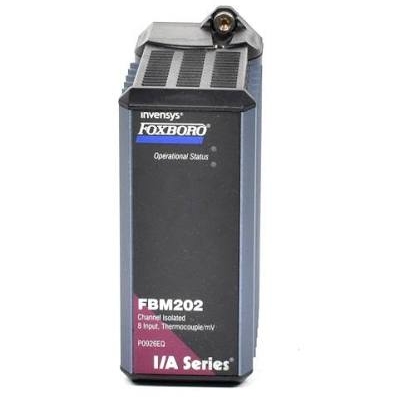
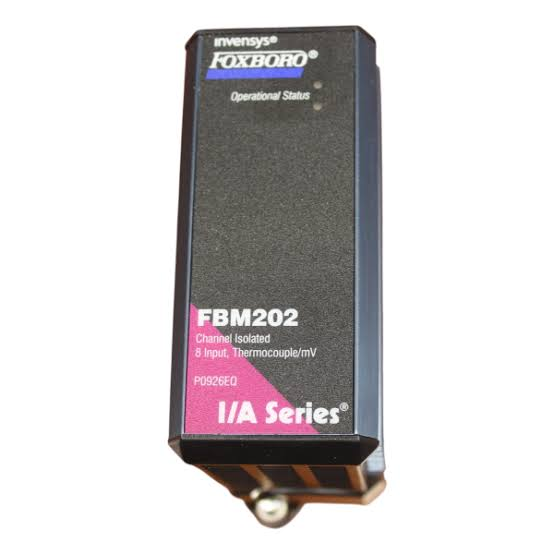
DIN rail-mounted FBMs: FBM201, FBM202, FBM203, FBM207, FBM242, and others
-
Y-module form factor FBMs: FBM01, FBM02, and related series
-
Specialized devices: Hydrostatic Interface Unit (HIU), Mass Flowmeter, Panel Display Stations
-
Legacy migration: Supports DCS Fieldbus Modules for Honeywell TDC 2000/3000, Bailey NET90/INFI90, and Fisher PROVOX systems
Enhanced Maintenance Capabilities
The CP60 features a recessed reset button on the front of the module, allowing technicians to manually power-cycle the processor without removing it from the enclosure . In redundant configurations, the module supports live hot-swap replacement on an energized backplane, enabling maintenance without process disruption and minimizing Mean Time to Repair (MTTR) .
Rugged Industrial Design
The module provides 1500 VAC galvanic isolation between field communication ports and the internal CPU core power rail, protecting sensitive processing circuitry from electrical transients and ground potential rises . It is designed for continuous operation in harsh industrial environments with an operating temperature range of 0°C to +60°C .
Comprehensive Diagnostic Suite
The CP60 employs three types of diagnostic tests:
-
Power-up self-checks: Sequential testing of functional elements during startup, with front-panel red/green indicators reflecting completion status
-
Run-time and watchdog timer checks: Continuous monitoring during normal operation, with fault notification via system messages
-
Off-line diagnostics: Temporary comprehensive testing to isolate and confirm suspected faults
Recommended Related Models
Compatible I/A Series Components:
-
Fieldbus Communication Modules: FCM10E, FCM10Ef
-
DIN Fieldbus Converters: DCM10E, DCM10Ef
-
Fieldbus Isolators: FBI10E
-
Mounting Structures: Standard I/A Series enclosures and backplanes
-
Power Supplies: Regulated 24 VDC SELV rack supply
Frequently Asked Questions (FAQ)
Q1: What is the primary function of the Foxboro P0961FR CP60?
The CP60 is the central control processor for an I/A Series DCS node. It executes regulatory control, logic, timing, and sequential control strategies, manages data acquisition and alarm detection via connected Fieldbus Modules (FBMs), and communicates with operator workstations and other system nodes via the Nodebus and Ethernet fieldbus .
Q2: What is the difference between the CP60 and CP60S?
The CP60 (P0961FR) is the fault-tolerant version, consisting of two single-width processor modules operating in parallel for redundancy. The CP60S is the simplex (non-fault-tolerant) version, a single-width processor module without redundancy capability .
Q3: How does the CP60 achieve fault tolerance?
In a fault-tolerant configuration, two CP60 processor modules operate in parallel, each with independent connections to the Nodebus and Ethernet fieldbus. Both modules simultaneously receive and process information, comparing communication messages at their external interfaces to detect faults. Upon fault detection, self-diagnostics determine which module is defective, and the non-defective module assumes control without affecting normal system operations .
Q4: How many FBMs can the CP60 support?
The CP60 directly supports up to 32 FBM cards on a local backplane. With the addition of an FEM100 Fieldbus Expander Module, this capacity expands to 128 FBMs per node . Some sources cite a maximum of 120 FBMs in specific configurations .
Q5: Can the CP60 be replaced without shutting down the system?
Yes, but only in redundant paired configurations. The CP60 supports full hot-swap (live extract/insert) on an energized I/A Series backplane when deployed as part of a fault-tolerant pair . In simplex installations, the rack must be taken offline before module removal.
Q6: What types of FBMs and devices does the CP60 support?
The CP60 supports:
-
DIN rail-mounted FBMs: FBM201, FBM202, FBM203, FBM207, etc.
-
Y-module form factor FBMs: FBM01, FBM02, etc.
-
Specialized devices: Hydrostatic Interface Unit (HIU), Mass Flowmeter, Panel Display Stations
-
Legacy migration: Honeywell TDC 2000/3000, Bailey NET90/INFI90, Fisher PROVOX via DCS Fieldbus Modules
Note: The CP60 does not support Foxboro gas chromatographs, dense I/O, or devices using FBP10/11/12/13/14 Fieldbus Processors .
Q7: What diagnostic features does the CP60 include?
The CP60 uses three diagnostic methods: power-up self-checks (sequential testing of functional elements with front-panel LED indication), run-time and watchdog timer checks (continuous monitoring during operation with system message notification), and off-line diagnostics (temporary comprehensive testing to isolate suspected faults) .
Q8: What firmware considerations are important for the CP60?
Firmware version compatibility between redundant CP60 pairs is critical. Both primary and standby processors must run identical exact firmware build numbers before rack power-up. Mismatched firmware prevents the standby from mirroring the runtime database and can cause failover failure during active CPU faults . Always verify firmware compatibility with your FBM population and I/A Series software version.
Q9: What communication protocols does the CP60 support?
The CP60 supports 2 Mbps Foxboro Nodebus, 10/100BaseTX Ethernet, RS232 HDLC, and Modbus RTU/TCP protocols . The Ethernet fieldbus operates at 10 Mbps and supports Global Data exchange .
Q10: What is the manual reference for the P0961FR?
The P0961FR is documented in Foxboro manual PSS 21H-1B7 B4, which provides detailed specifications, configuration guidelines, and installation instructions for the Control Processor 60 .