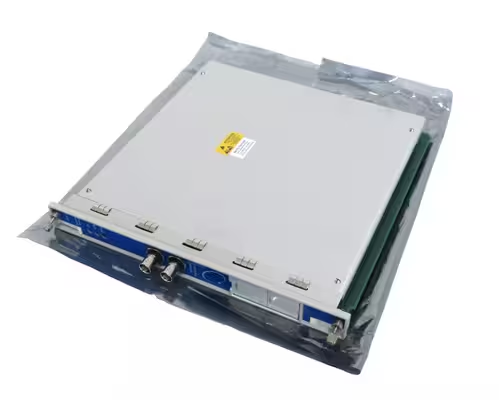
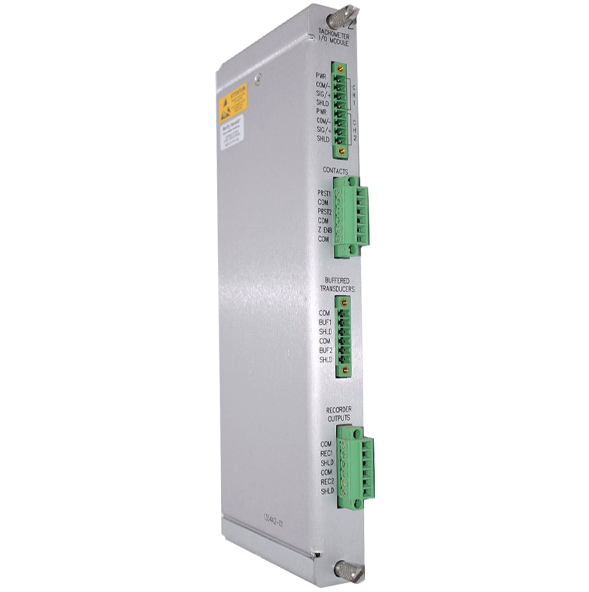
Product Details
Related Product Model Recommendations
Payment & Delivery

FAQs

Q1: What is the primary function of the 3500/50-01-00?
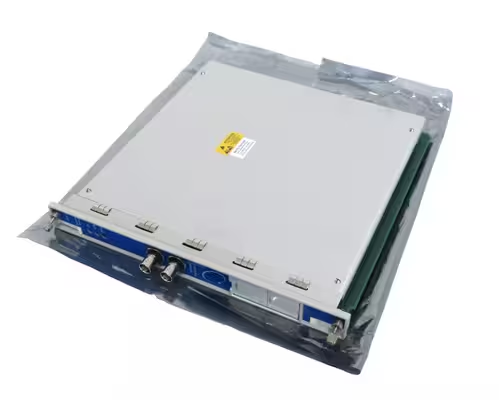
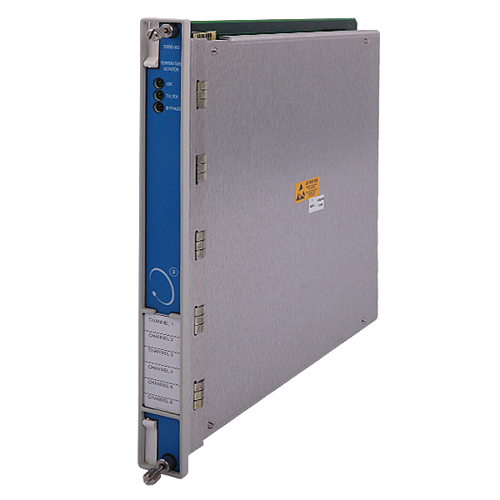
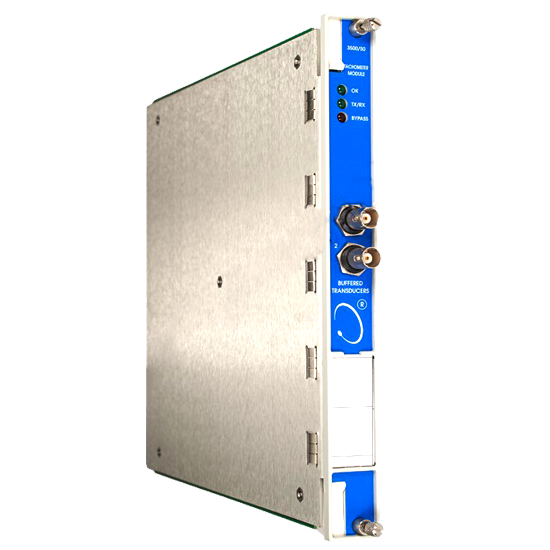
It is a 2-channel Tachometer Module that accepts input from proximity probes or magnetic pickups to determine shaft rotational speed, rotor acceleration, and rotor direction. It compares these measurements against user-programmable alarm setpoints and generates alarms when thresholds are violated. It can also supply conditioned Keyphasor signals to the 3500 rack backplane for use by other monitoring modules.
Q2: Can the 3500/50 be used for overspeed protection?
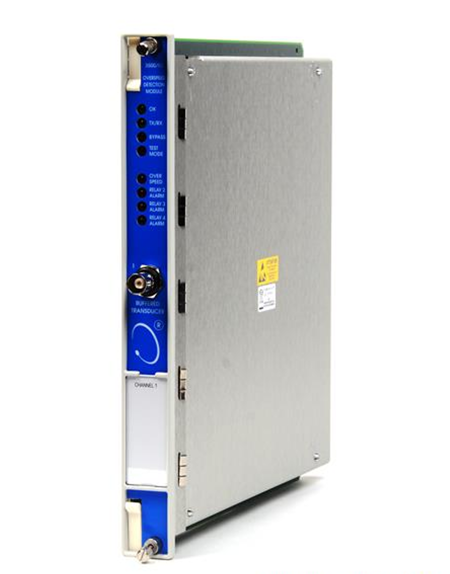
No. Bently Nevada explicitly states that Tachometer Modules are not designed for use independently as, or as a component of, a speed control or overspeed protection system. They do not provide the protective redundancy or response speed needed for reliable overspeed protection. For overspeed protection, the dedicated 3500/53 Overspeed Detection Module is required.
Q3: What are the configuration options for the 3500/50?
The module can be configured via 3500 Rack Configuration Software for:
-
Speed Monitoring with Setpoint Alarming and Speed Band Alarming
-
Speed Monitoring with Setpoint Alarming and Zero Speed Notification
-
Speed Monitoring with Setpoint Alarming and Rotor Acceleration Alarming
-
Speed Monitoring with Setpoint Alarming and Reverse Rotation Notification
Q4: What is the difference between 133388-02 and 133442-01?
The 133388-02 is the Tachometer Module main card (front panel) that processes transducer signals and generates alarms. The 133442-01 is the I/O Module with Internal Terminations (rear module) that provides the physical terminal connections for field wiring. Both are required together to form a complete 3500/50-01-00 monitoring channel.
Q5: Can the 3500/50 be hot-swapped?
Yes. The 3500 backplane supports hot-swapping of the tachometer module. However, removing it under power will temporarily remove speed and direction monitoring for the connected channels, which could trigger external ESD trips or alarms. Always verify that connected external circuits can tolerate a momentary loss of monitoring or schedule a maintenance window.