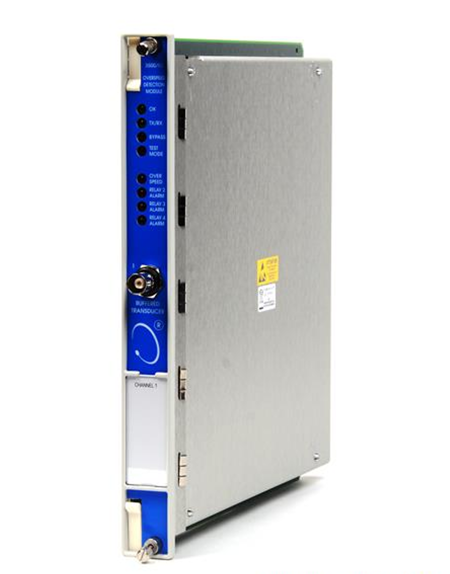
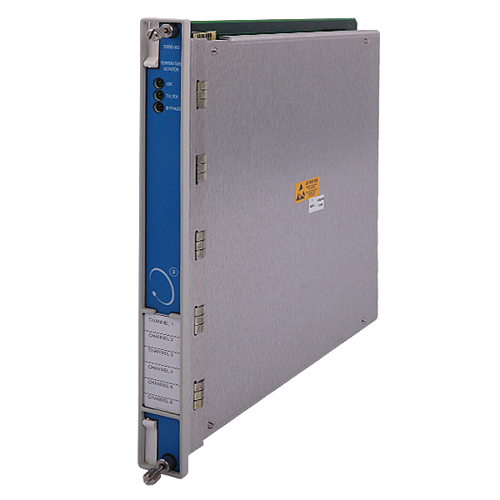
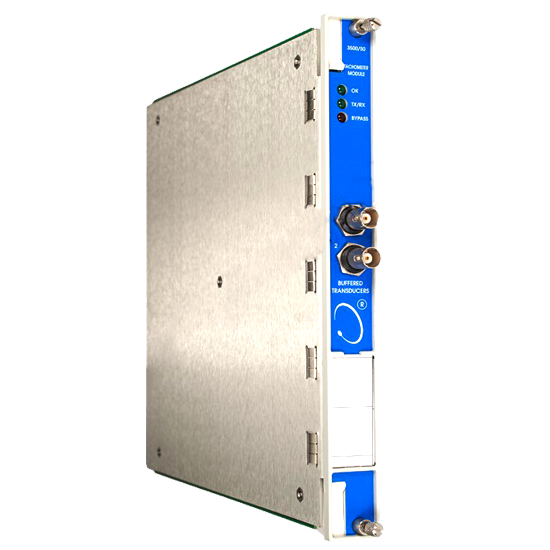
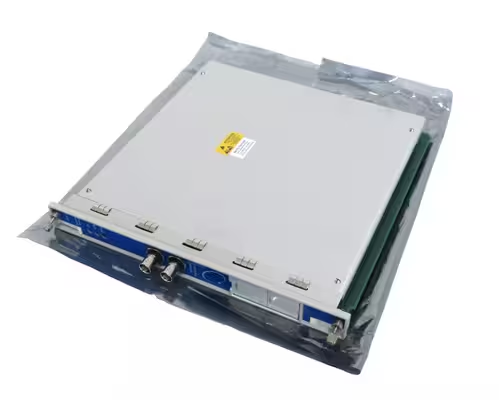
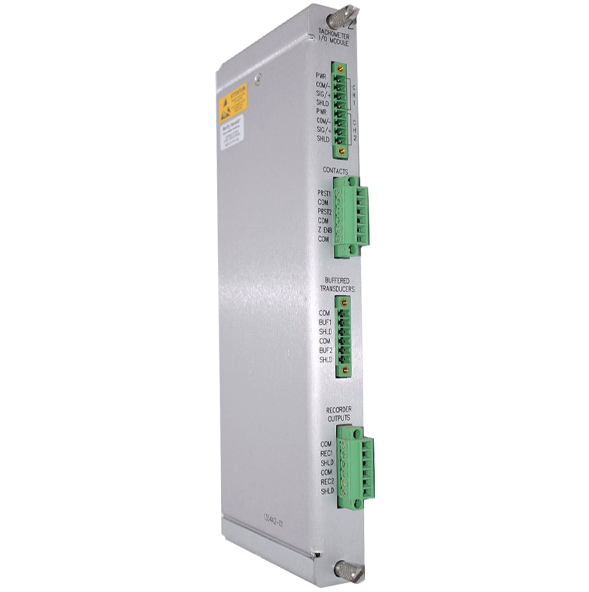
Product Details
Related Product Model Recommendations
FAQs
Q1: What is the primary function of the 3500/53M?
It is a dedicated Electronic Overspeed Detection Module that provides high-reliability, fast-response overspeed protection for critical rotating machinery. It continuously monitors shaft speed via proximity probes or magnetic pickups and triggers alarm or shutdown relays when speed exceeds user-programmable setpoints. It is designed to meet API 670 and 612 overspeed protection requirements .
Q2: What is the difference between the 3500/53M and the legacy 3500/53?
The 3500/53M is the M-series split-base design that uses a separate 286566-01 front card and a 133396-01 rear I/O terminal base. The legacy 3500/53 uses an integrated 133388-01 card with built-in terminals. The M-series design allows field wiring and barrier modifications without removing the main measurement card from the rack, reducing maintenance downtime .
Q3: Does the 3500/53M require redundant power supplies?
Yes. The use of redundant power supplies (two 3500/15 modules) in the rack containing the Overspeed Detection System is mandatory. This ensures that a single power supply failure cannot disable the overspeed protection function .
Q4: How does the 2oo3 voting work?
In a 2-out-of-3 (2oo3) configuration, three separate Overspeed Detection Modules each monitor an independent transducer signal. The alarm outputs from each module are compared via a high-speed inter-module communication network on the backplane, and two modules must agree before a relay is driven. This provides maximum availability — a single module failure will not cause a false trip or prevent a valid trip .
Q5: Can the 3500/53M be used as part of a functional safety system?
Yes. The 3500/53M is certified for use as part of a SIL-rated functional safety system. However, firmware upgrades are not permitted until the new version has been verified and added to the TÜV FS Mark certificate. Always verify the certificate status before performing firmware updates.