Product Details
Related Product Model Recommendations
Payment & Delivery

FAQs

Q1: What is the primary function of the 3500/34 TMR Relay Module?
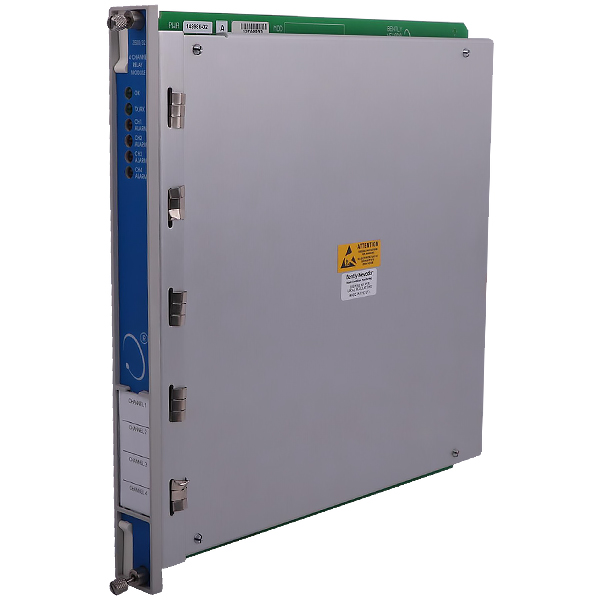
It is a TMR relay output system that provides high-reliability relay outputs for safety-critical machinery protection. It uses three independent relays to drive a single relay output, working with a TMR Rack Interface Module and three monitor modules to provide 2-out-of-3 voting for inputs. This architecture ensures that a single component failure cannot disable critical equipment protection functions .
Q2: How does the TMR voting logic work?
Within a TMR rack, three monitors provide alarm signals via three separate data paths. The TMR Relay Module (125696-01) evaluates each path independently, generates three Alarm Contact Signals, and passes them to the TMR Relay I/O Module (125704-01). The I/O Module contains 12 relays arranged in four channel groups of three. For each channel, the three signals are fed to three separate relays, and the output is determined by 2-out-of-3 voting. If a data path's OK status is NOT OK, the corresponding alarm contact signal is invalidated .
Q3: What is the difference between the 125696-01 and the 125704-01?
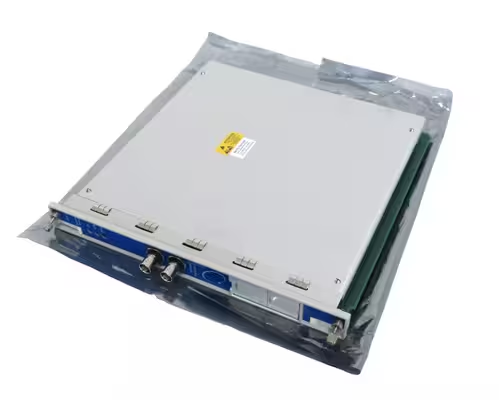
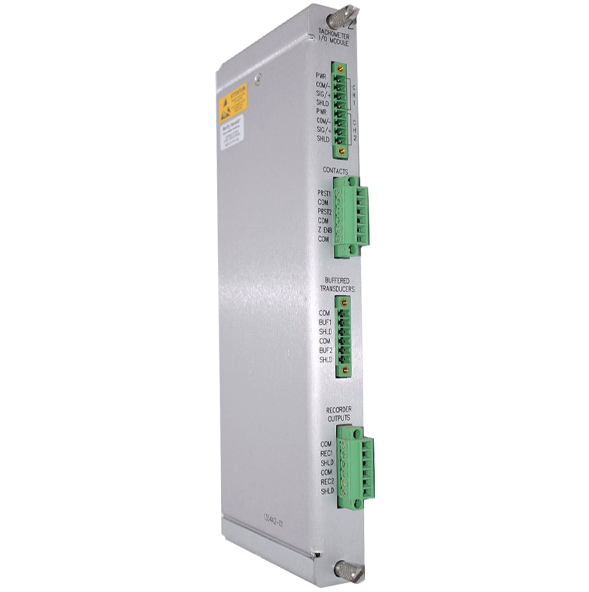
The 125696-01 is the half-height TMR Relay Module (main card) that processes alarm logic and generates three independent alarm contact signals per channel. The 125704-01 is the full-height TMR Relay I/O Module that contains the 12 physical relays and executes the 2-out-of-3 voting to determine the final output state. Both are required together to form a complete 3500/34 TMR Relay Module .
Q4: What are the contact ratings for the 3500/34?
The relay contacts are rated for:
-
Maximum switched power: 60 W DC, 125 VA AC
-
Maximum switched current: 2 A
-
Maximum switched voltage: 150 Vdc, 220 Vac
-
Minimum switched current: 100 mA @ 5 Vdc
-
Contact life: 100,000 cycles
Q5: What are the typical applications for the 3500/34?
It is used in gas turbine protection systems, compressor emergency shutdown logic, high-integrity safety interlock systems, power generation machinery protection, and other critical rotating equipment applications where redundancy is required to prevent false trips and ensure reliable shutdown.