Product Details
Related Product Model Recommendations
Payment & Delivery

FAQs

Q1: What is the primary function of the 125744-01?
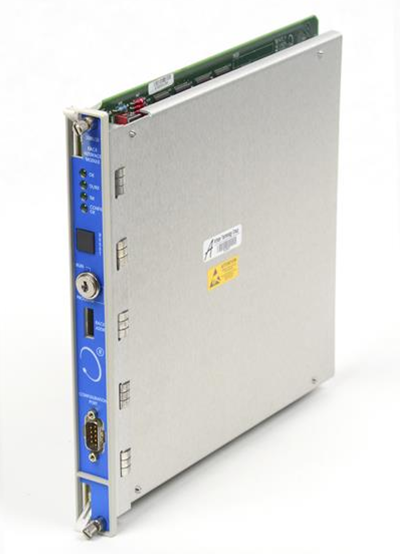
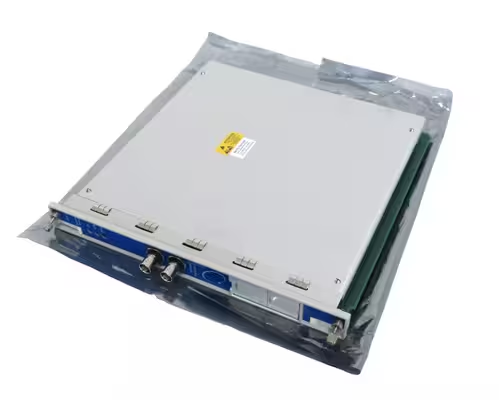
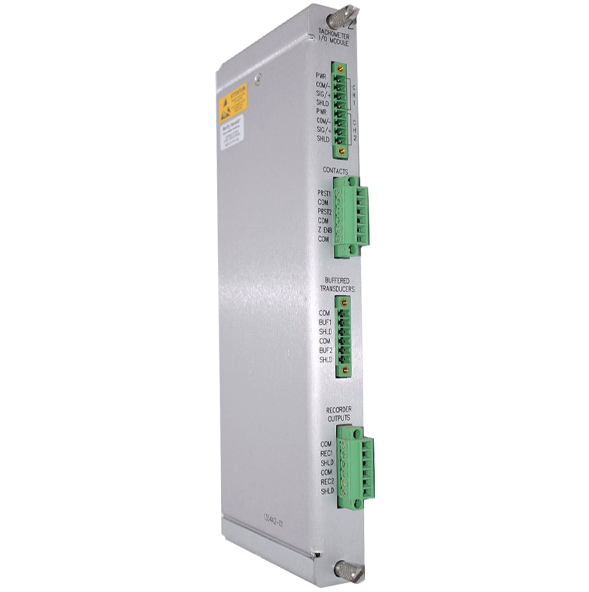
It is the TMR Rack Interface Module (main card) for the 3500 series machinery protection system. It serves as the primary communication interface for rack configuration, data retrieval, and integration with external monitoring software. In TMR configurations, it performs real-time monitor channel comparison — continuously comparing outputs from three redundant monitors and flagging any monitor whose output differs from the other two beyond a configured percentage.
Q2: Where must the 125744-01 be installed?
The module must be installed in Slot 1 of the 3500 rack, adjacent to the power supply. Each 3500 rack requires exactly one RIM or TDI. The module provides certain common functions for the entire rack but is not part of the critical monitoring path .
Q3: What is the difference between 125744-01 and 125744-02?
The 125744-01 is the TMR Rack Interface Module (main card) that performs monitor channel comparison functions for Triple Modular Redundant configurations. The 125744-02 is the Standard Rack Interface Module (main card) for non-TMR applications. The TMR version is required when the rack is configured for triple redundancy.
Q4: What is the TMR channel comparison function?
In TMR configurations, the 3500 system requires a TMR version of the RIM. The TMR RIM continually compares a specified output of 3 redundant monitors. If it detects that information from one monitor is no longer equivalent (within a configured percent) to the remaining two, it flags that monitor as being in error and places an event in the System Event List .
Q5: Does the 125744-01 affect the critical monitoring path?
No. While the RIM provides certain common functions for the entire rack, it is not part of the critical monitoring path. The monitoring system's automatic machinery protection functions continue to operate normally even if the RIM is removed or fails. However, the RIM is essential for rack configuration, data retrieval, and system diagnostics.