Technical Specifications
Conversion Time Options (Software Configurable)
Data source: I/A Series FBM03 hardware specification
Key Features & Benefits
Eight Isolated RTD Input Channels
The FBM03 provides eight fully isolated, independent RTD input channels, each accepting Platinum or Nickel resistance temperature detectors. The per-channel isolation withstands 600 V AC for one minute between any channel and earth or between channels, preventing ground loops and field faults from propagating between channels or damaging upstream electronics .
Flexible 2-, 3-, and 4-Wire RTD Support
Each channel supports 2-wire, 3-wire, or 4-wire RTD configurations, providing flexibility for different field wiring schemes and lead resistance compensation requirements. Critical restriction: Within the same module, 3-wire RTDs may not be mixed with 2- or 4-wire RTDs. Mixing these configurations on one card will cause resistance measurement offsets and trigger signal fault flags .
High-Precision Signal Conversion
The FBM03 delivers exceptional measurement accuracy with ±0.025% of span (±0.08 Ω) and ±0.25°C conformity for Platinum and Nickel RTDs. The module supports software-configurable conversion times of 0.1, 0.2, 0.5, and 1.0 seconds, providing resolution ranging from 12 to 15 bits and allowing optimization of speed versus precision for each application .
Redundant Fieldbus Architecture
As a main-type FBM, the module independently connects to the redundant Fieldbus. If one Fieldbus segment fails, the module automatically switches to the alternate path, maintaining continuous data exchange with the control processor without process interruption. Fieldbus switching enable and switching time are software-configurable .
Plug-and-Play Hot-Swap Capability
The FBM03 supports live insert and removal on an energized I/A Series baseplate. Technicians can replace a failed unit without powering down the rack or disturbing field wiring, dramatically reducing Mean Time to Repair (MTTR) and enabling maintenance during continuous process operations .
Rugged Industrial Construction
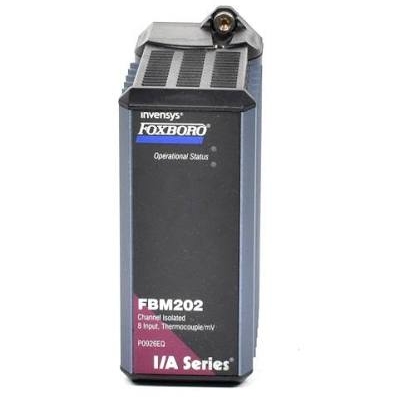
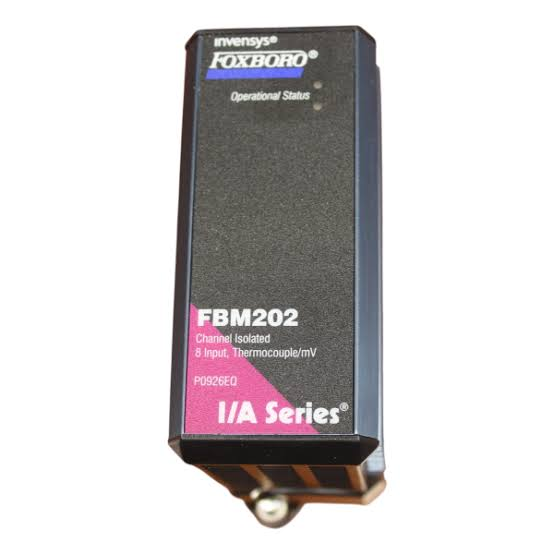
The module is engineered for harsh industrial environments with an extruded aluminum housing for heat dissipation and noise immunity. It is rated for Class G3 (Harsh) environments per ISA S71.04, making it suitable for chemical plants, refineries, and power generation facilities .
Recommended Related Models
Compatible I/A Series Components:
-
Control Processors: CP30, CP40, CP60, FCP270, FCP280
-
Fieldbus Communication Modules: FCM10E, FCM2F2
-
Fieldbus Expander Modules: FEM100
-
Termination Assemblies (TAs): For locally or remotely connecting field wiring
Frequently Asked Questions (FAQ)
Q1: What is the primary function of the Foxboro P0400YD FBM03?
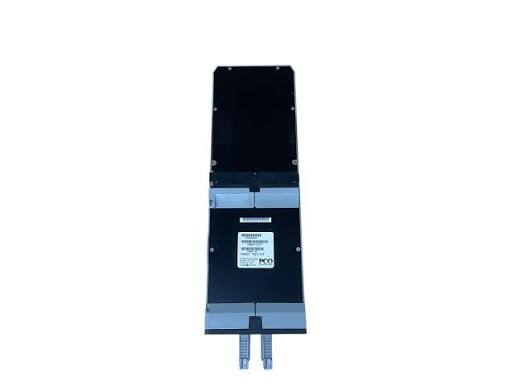
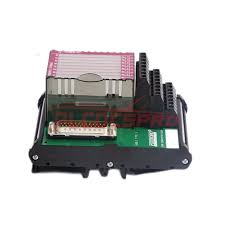
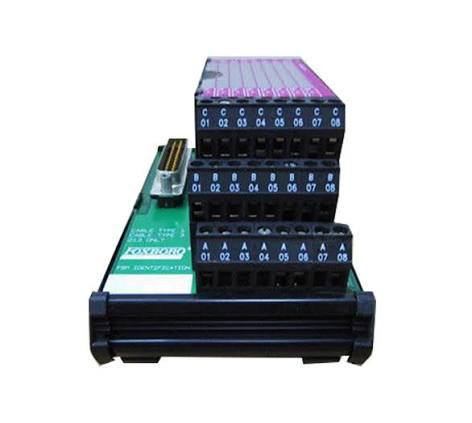
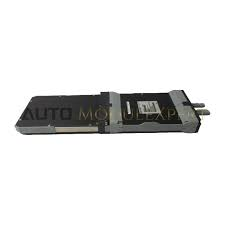
The FBM03 is an 8-channel RTD input interface module for the I/A Series DCS. It accepts resistance signals from Platinum and Nickel RTD sensors, performs signal conversion, and transmits digitized temperature data to the control processor over the redundant Fieldbus .
Q2: What types of RTD sensors does the FBM03 support?
The module supports Platinum RTDs (100 Ω nominal at 0°C) and Nickel RTDs (235 Ω nominal at 0°C) within a 0 to 320 ohm resistance range. Common industrial RTD types such as Pt100 and Ni100 are compatible .
Q3: What wiring configurations are supported by the FBM03?
Each channel supports 2-wire, 3-wire, or 4-wire RTD configurations. Important: You cannot mix 3-wire RTDs with 2- or 4-wire RTDs on the same module. Doing so will cause measurement errors .
Q4: What is the input range and accuracy of the FBM03?
The input range is 0 to 320 ohms per channel. Accuracy is ±0.025% of span (±0.08 Ω), with ±0.25°C conformity for Platinum and Nickel RTDs .
Q5: What are the configurable options for the FBM03?
The Analog Input application program supports three configurable options: Analog Input Resolution (per module basis), Fieldbus Switching Enable, and Fieldbus Switching Time .
Q6: Can the FBM03 be replaced without shutting down the system?
Yes. The FBM03 supports hot-swap replacement on an energized I/A Series baseplate. Field wiring, power, and communication cables remain undisturbed, and the redundant Fieldbus ensures no loss of communication during the swap .
Q7: What isolation does the FBM03 provide?
The module withstands 600 V AC for one minute between any channel and earth, or between any two channels, without damage. Each channel is individually isolated for fault containment and noise immunity .
Q8: What is the difference between the FBM03 and FBM203?
The FBM03 (P0400YD) is a "Classic" FBM family module designed for legacy I/A Series backplanes. The FBM203 is a newer generation 8-channel RTD input module with updated diagnostics and firmware. The FBM203 is specifically noted as supporting the functionality of the 100 Series FBM03A when used with 3-wire RTD inputs . They are not universally interchangeable; always consult the Foxboro hardware manual to match the correct module to your backplane.
Q9: What is the sensor excitation current of the FBM03?
The module provides a fixed 0.75 mA DC excitation current per RTD channel to drive the connected field sensor .
Q10: What environmental conditions can the FBM03 withstand?
The module operates reliably at 0°C to +60°C with storage capabilities beyond that range. It is rated for Class G3 (Harsh) environments per ISA S71.04, suitable for corrosive industrial atmospheres .