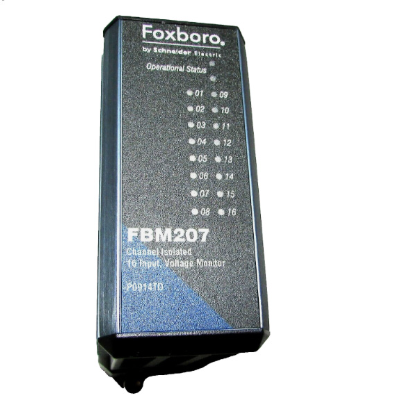
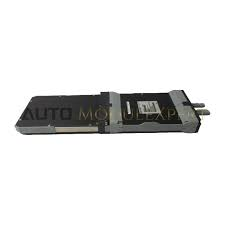
Technical Specifications
Compatible Termination Assemblies
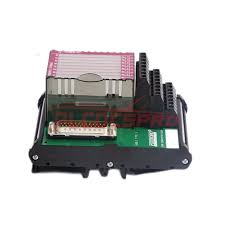
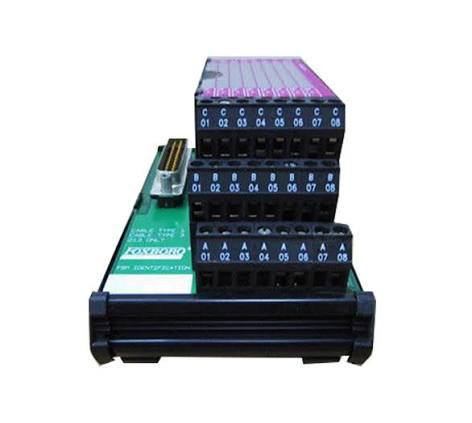
Note: Termination assemblies are sold separately. The P0917MF termination assembly is specifically designed for the FBM207c and should not be substituted with terminations intended for FBM207b (24 V) or other variants.
Key Features & Benefits
Sixteen Isolated Contact Sense Channels
The FBM207c provides 16 fully isolated, independent contact sense input channels, each capable of detecting dry contact closures from field devices. The per-channel galvanic isolation withstands 600 V AC for one minute, preventing a single field wire short or ground fault from crashing the entire input bank and triggering false interlock trips.
Configurable Input Debounce Filtering
The module supports software-configurable input debounce filtering with options for no filter, 4 ms, 8 ms, 16 ms, or 32 ms. This eliminates noise-triggered false status indications from motor start electrical noise and contact bounce, while preserving valid equipment fault signals. The debounce range extends from 0.1 ms up to 255 ms per individual channel in advanced configurations.
Redundant Fieldbus Architecture
As a main-type FBM, the module independently connects to the redundant 2 Mbps Fieldbus. If one Fieldbus segment fails, the module automatically switches to the alternate path, maintaining continuous data exchange with the control processor without process interruption.
Hot-Swap Capability
The FBM207c supports live insert and removal on an energized I/A Series baseplate. Technicians can replace a failed unit without powering down the rack or disconnecting field wiring. Best practice is to disable all associated input channels in the control software before removal to prevent damage to internal optocoupler circuits.
Sequence of Events (SOE) Support
When used with I/A Series software version 8.x or later, the FBM207c supports Sequence of Events timestamping. Optional GPS synchronization provides 1 ms timestamp accuracy for precise event reconstruction in process upset analysis.
Redundant Configuration Ready
The module can be deployed in redundant pairs using the RH926ZY adapter for fault-tolerant architectures. The CINR block validates inputs across redundant modules, ensuring continuous operation during maintenance or module failure.
Rugged Industrial Construction
Rated for Class G3 (Harsh) environmental contamination per ISA S71.04, the module operates reliably in corrosive chemical plants, coastal installations, and other demanding industrial settings. It meets UL/UL-C Class I, Div 2, ATEX Zone 2, and EMC standards for global deployment.
Migration Support for DeltaV Systems
The P0917MF supports Flex.Connect solutions for migration to DeltaV architectures. It enables direct connection from I/A Series 200 termination assemblies to modern DeltaV CHARM terminal blocks (specifically Low-Side Sense SE4301T02 types) without requiring signal conditioning or field rewiring.
Recommended Related Models
Compatible I/A Series Components:
-
Control Processors: CP60, FCP270, FCP280
-
Termination Assemblies: P0917MF (compression), RH917MG, P0917MJ (ring lug)
-
Redundancy Adapter: RH926ZY
-
DeltaV Migration: SE4301T02 CHARM terminal blocks (Low-Side Sense)
Frequently Asked Questions (FAQ)
Q1: What is the primary function of the Foxboro FBM207c (P0917MF)?
The FBM207c is a 16-channel contact sense input module for the I/A Series DCS. It detects dry contact closures from field devices such as valve limit switches, motor starter auxiliary contacts, and breaker status contacts, converting these physical states into digital signals for the control processor via the redundant Fieldbus.
Q2: What wetting voltage does the FBM207c use?
The module operates with a 48 V DC contact wetting voltage (±15%), drawing approximately 3.2 mA short-circuit current per channel. This is distinct from the FBM207b, which uses 24 V DC wetting voltage.
Q3: What are the logic threshold specifications?
The module recognizes an on-state (closed contact) at ≤1.0 kΩ and an off-state (open contact) at ≥100 kΩ. These thresholds ensure reliable detection of contact status across varying field wiring conditions.
Q4: What debounce filter options are available?
The FBM207c supports software-configurable debounce filtering with options for no filter, 4 ms, 8 ms, 16 ms, or 32 ms per channel. This eliminates noise-triggered false status indications while preserving valid equipment signals. Advanced configurations support 0.1 ms to 255 ms per individual channel.
Q5: Can the FBM207c be used in redundant configurations?
Yes. The module can be deployed in redundant pairs using the RH926ZY redundancy adapter. The CINR block validates inputs across redundant modules, ensuring continuous operation during maintenance or failure.
Q6: Does the FBM207c support Sequence of Events (SOE) recording?
Yes. When used with I/A Series software version 8.x or later, the module supports Sequence of Events timestamping. Optional GPS synchronization provides 1 ms timestamp accuracy for precise event reconstruction.
Q7: What is the difference between FBM207c and FBM207b?
The primary difference is the contact wetting voltage: the FBM207c uses 48 V DC, while the FBM207b uses 24 V DC. The termination assemblies are not interchangeable between these variants. Always verify the exact FBM model before ordering terminations.
Q8: Can the FBM207c be hot-swapped?
Yes. The module supports live insert and removal on an energized baseplate. However, best practice is to disable all 16 associated input channels in the control software before removal to prevent damage to internal optocoupler circuits from exposed front header pins.
Q9: What termination assembly is compatible with the FBM207c?
The P0917MF is the dedicated compression termination assembly for the FBM207c. Alternative options include the RH917MG (compression) and P0917MJ (ring lug). Never use termination assemblies designed for FBM207b or other variants, as mismatched internal terminal pinouts deliver incorrect voltage levels.
Q10: Does the FBM207c support migration to DeltaV systems?
Yes. The P0917MF supports Flex.Connect solutions for DeltaV migration. It enables direct connection from I/A Series 200 termination assemblies to DeltaV CHARM terminal blocks, specifically Low-Side Sense (SE4301T02) types, without requiring signal conditioning or field rewiring.
Q11: What environmental conditions can the FBM207c withstand?
The module is rated for Class G3 (Harsh) environmental contamination per ISA S71.04. Operating temperature is -20°C to +70°C, with storage from -40°C to +70°C. It meets UL/UL-C Class I, Div 2, ATEX/DEMKO Ex nA IIC T4 (Zone 2), and EMC standards.
Q12: What are typical applications for the FBM207c?
The module is commonly used for: process control valve position feedback in chemical plants, safety interlock monitoring in oil and gas facilities, equipment status detection in power generation stations, alarm and event logging with SOE timestamping, and pump/motor status monitoring in water treatment systems.