Key Parameters and Features
Core Features & Advantages
-
Cross-Vendor Protocol Gateway: The module's standout feature is its ability to act as a protocol conversion gateway, allowing the CENTUM DCS to read and write data to third-party devices without complex programming. It supports multiple industrial protocols including FA-M3, Modbus, MELSEC, and DNP3, enabling seamless integration of auxiliary control systems, analyzers, and vibration monitoring equipment into the main DCS.
-
ISA Standard G3 Corrosion Protection: The -S51 suffix specifically indicates the ISA Standard G3 conformal coating on the internal circuit board. This chemical barrier protects against silver and copper degradation caused by ambient atmospheric pollutants such as hydrogen sulfide, chlorine, and sulfur dioxide, making it suitable for installation in safe-area control rooms subject to corrosive airborne industrial gases.
-
Deterministic Data Mapping into DCS Control Logic: The ALE111 captures external device registers and injects the processed data into the FCS backplane bus within a fixed processing window. This enables the DCS to use subsystem data through function block I/O terminals in the same way as general analog and digital I/O signals, allowing external data to participate directly in control calculations.
-
Dual-Redundant Communication Support: The module supports dual-redundant configurations by installing two ALE111 modules. This provides higher reliability and fault tolerance for mission-critical process automation networks.
-
Safety System Compatibility: In addition to standard process control, the ALE111-S51 can be mounted on Safety Control Stations (SCS) in ProSafe-RS systems, supporting Modbus slave and DNP3 slave communication functions. The module is designed as an interference-free module that has no interference with the safety loop.
Typical Applications
The ALE111-S51 is widely used for integrating external systems into Yokogawa DCS environments:
-
Auxiliary System Integration: Connecting FA-M3 PLCs, packaging machines, and utility control systems to the main CENTUM DCS
-
Data Acquisition: Reading flow meters, analyzers, and third-party vibration monitoring equipment into the DCS
-
Safety System Communication: Used in ProSafe-RS Safety Control Stations for Modbus slave communication and DNP3 slave functions, enabling SCADA and other systems to access safety data
-
Corrosive Environment Installations: The ISA G3 coating makes it suitable for chemical plants and oil facilities where airborne pollutants are present
Frequently Asked Questions (FAQ)
Q1: What is the primary function of the ALE111-S51?
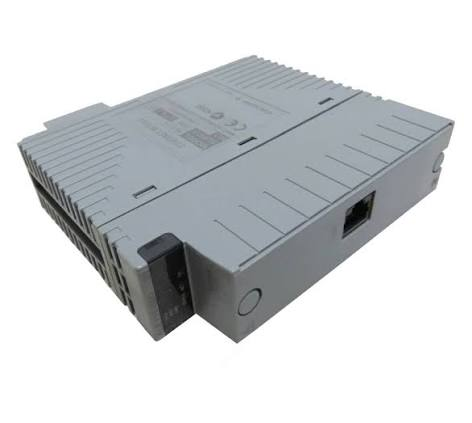
A: It is an Ethernet communication module that enables Yokogawa CENTUM VP/CS 3000 Field Control Stations to communicate with external subsystems (FA-M3 PLCs, Modbus devices, etc.) over a 10BASE-T Ethernet connection, acting as a protocol gateway for data exchange.
Q2: What does the "-S51" suffix indicate?
A: In Yokogawa's naming convention: -S = Standard type; 5 = No explosion protection; 1 = ISA Standard G3 option. The S51 is the basic version without explosion protection but with G3 corrosion protection coating.
Q3: Does the ALE111-S51 support 100 Mbps or Gigabit Ethernet?
A: No. The module operates strictly at 10 Mbps Half-Duplex on IEEE 802.3 10BASE-T. When connecting to modern switches, the switch port must be set to auto-negotiation or forced to 10 Mbps Half-Duplex to prevent duplex mismatch errors.
Q4: Can the ALE111-S51 be used in hazardous areas?
A: No. The "5" digit indicates the hardware completely lacks explosion protection certifications, rendering it unsuitable for hazardous areas classified as Zone 1, Zone 2, or Class I Division 2. For hazardous area installations, the ALE111-SE1 variant with explosion protection should be selected.
Q5: What protocols does the ALE111-S51 support?
A: It supports FA-M3, Modbus, MELSEC, YFGW, DARWIN/DAQSTATION, and PLC-5/SLC500 communication functions. For Safety Control Stations (SCS), it also supports DNP3 slave communication.
Q6: What is the maximum communication capacity per module?
A: Each ALE111 supports 1000 words of I/O data and 128 communication definitions. The maximum total communication I/O data capacity per FCS is 8000 words.
Q7: Can the ALE111-S51 be hot-swapped?
A: According to supplier recommendations, hot-swapping is not recommended. Although some Yokogawa communication modules support online replacement, Ethernet modules involve network topology changes, and forced hot-swap may cause transient network storms or backplane current surges. The recommended practice is to power down during a planned maintenance window or confirm redundant communication paths before operating.
Q8: Does the module require reconfiguration after replacement?
A: Yes. New modules ship in default state. After replacement, you need to re-download network configuration parameters through Yokogawa engineering tools (such as System View). It is recommended to export the current network configuration file before replacement so it can be imported directly afterward.
Recommended Models & Related Products
The ALE111-S51 is part of Yokogawa's communication module family for CENTUM DCS. Below are related models and components:
Choosing the Right Model
-
For standard safe-area applications: The ALE111-S51 is the correct choice for non-hazardous control room environments requiring G3 corrosion protection.
-
For standard applications without G3: The ALE111-S50 offers the same core functionality without the ISA G3 coating.
-
For hazardous area installations: The ALE111-SE1 is the correct choice with explosion protection certification.
-
For serial communication needs: Consider the ALR111-S51 (RS-232) or ALR121-S51 (RS-422/485).
-
For fieldbus integration: The ALF111-S51 supports FOUNDATION Fieldbus H1 devices.