Product Details
Related Product Model Recommendations
Payment & Delivery

FAQs

Q1: What is the primary function of the SPIET800?
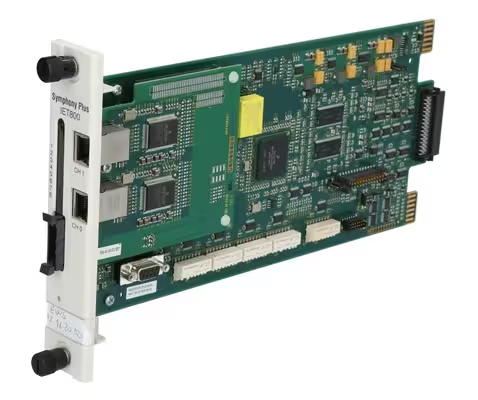
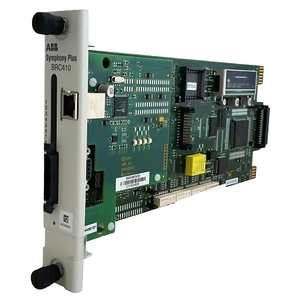
It is an Ethernet CIU (Computer Interface Unit) Transfer Module that bridges the proprietary INFI-NET control network with modern Ethernet TCP/IP networks. It enables host computers, SCADA systems, and engineering tools to access process data, issue commands, and perform diagnostics on legacy Symphony Plus / INFI 90 controllers .
Q2: What communication protocols does the SPIET800 support?
The module supports TCP/IP, UDP, Modbus TCP, OPC DA/UA, and IEC 61850 protocols for seamless integration with SCADA, PLC, and third-party systems. It also natively understands INFI-NET messaging and maps that traffic onto Ethernet streams while preserving timing and determinism required by control applications .
Q3: Is the SPIET800 affected by any security vulnerabilities?
Yes. ABB has published security advisories for CVE-2021-22285, CVE-2021-22286, and CVE-2021-22288, which affect SPIET800 modules with firmware version A_B and prior. These vulnerabilities can cause Denial-of-Service (DoS) conditions requiring manual reboot. Firmware version A_D (released August 2022) fixes all vulnerabilities . Users should verify their firmware version and apply the update or implement recommended mitigations.
Q4: Does the SPIET800 support redundancy?
Yes. The module supports 1:1 hot-standby redundancy when paired with a redundant SPIET800 and the SPK800-RCL1 redundancy cable. Link auto-switchover ensures uninterrupted communication. MTBF exceeds 100,000 hours .
Q5: What are the typical applications for the SPIET800?
It is widely used in power generation (turbine control, DCS-SCADA integration), oil & gas and petrochemical plants, metallurgy and paper mills, and water/wastewater treatment facilities that run ABB Symphony Plus or INFI 90 DCS infrastructure and need to migrate supervisory functions to modern Ethernet networks without replacing the entire control system.