Product Details
Related Product Model Recommendations
Payment & Delivery

FAQs

Q1: What is the primary function of the SPHSS13?
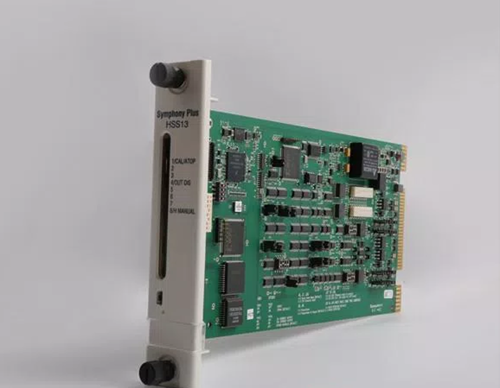
It is a hydraulic servo module that provides closed-loop position control for hydraulic actuators in turbine control systems. It receives a position demand from the DCS controller, executes local PI or P-Only control algorithms, and drives a servo valve or I/H converter to position the actuator. Redundant LVDT feedback ensures precise, fault-tolerant valve positioning .
Q2: Can the SPHSS13 be hot-swapped?
Yes (per official manual guidance). The module supports hot-swap capability, allowing online replacement without shutting down the DCS rack. However, this should only be performed during a planned maintenance window or when a redundant control path is verified, as the module controls critical turbine valves .
Q3: What is the difference between SPHSS13 and IMHSS03?
The SPHSS13 is the upgraded replacement for the IMHSS03/IMHSS05 modules. It maintains mechanical and electrical compatibility with existing Harmony Rack systems, allowing straightforward upgrades of legacy Bailey INFI 90 installations without rewiring the cabinet. Key improvements include higher drive current capability (±300 mA vs. ±40 mA typical for older modules) and enhanced PI control logic .
Q4: What are the common failure symptoms?
Failures typically manifest as valve hunting/oscillation (often due to noisy LVDT feedback wiring), no valve movement (check 24V supply and output current), position mismatch (calibration constants in DCS logic), or card fault LED lit (backplane connection or internal servo amplifier failure). Hydraulic fluid condition and servo valve filter clogging can mimic electronic faults .
Q5: What are the typical applications for the SPHSS13?
It is widely used in thermal power plants (steam turbine governor valves, main steam valves), gas turbine plants (fuel control valves, inlet guide vanes), hydroelectric plants (wicket gate control), and combined-cycle plants for unit speed and load regulation. It is classified as an A-class critical spare because valve control loss can cause turbine overspeed and trip.