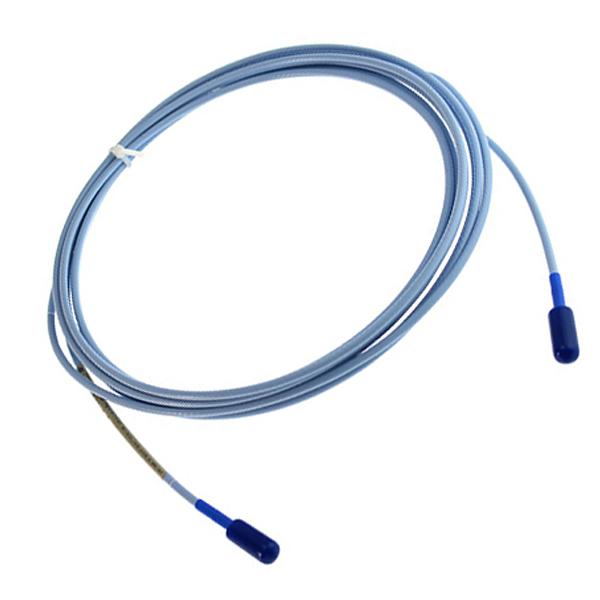
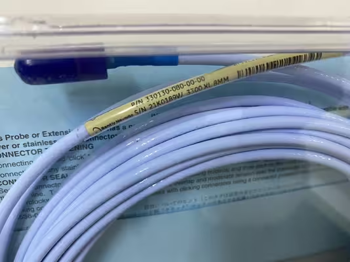
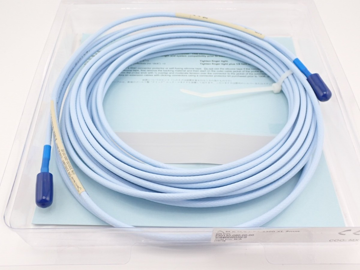
Product Details
Part Number Breakdown (330709-000-050-10-02-00):
-
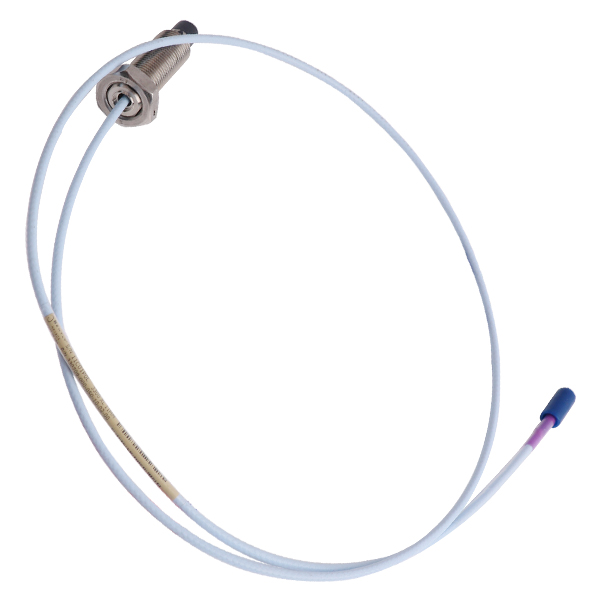
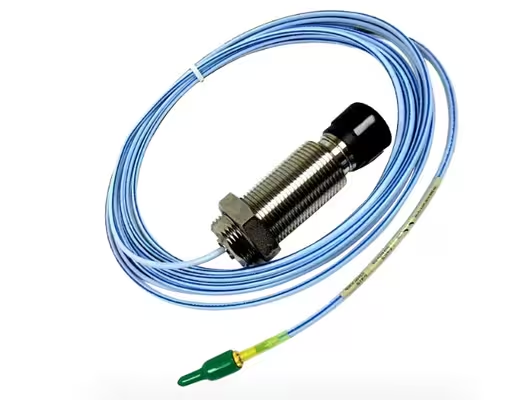
330709 – 3300 XL 11 mm probe, M16×1.5 thread, no armor
-
-000 – 0 mm unthreaded length
-
-050 – 50 mm overall case length
-
-10 – 1.0 meter cable length
-
-02 – Miniature coaxial ClickLoc connector, standard cable
-
-00 – No agency approval required
Related Product Model Recommendations
FAQs
Q1: What is the primary function of the 330709-000-050-10-02-00?
It is an 11 mm eddy-current proximity probe used for non-contact measurement of shaft vibration, axial position, and differential expansion on large rotating machinery. Its larger tip provides a longer linear range (4.0 mm) than the standard 8 mm system, making it suitable for applications requiring greater measurement span .
Q2: What do the part number segments mean?
-
330709 = 11 mm probe, M16×1.5 metric thread, non-armored
-
-000 = 0 mm unthreaded length (fully threaded)
-
-050 = 50 mm overall case length
-
-10 = 1.0 meter cable length
-
-02 = Miniature coaxial ClickLoc connector, standard cable
-
-00 = No agency approvals (general purpose)
Q3: Which Proximitor sensor is required for this probe?
The total electrical length of the probe cable plus extension cable must equal the Proximitor's rated system length. Since this probe has a 1.0 m cable, you must pair it with a 1.0 m Proximitor (or use a 4.0 m extension cable to match a 5.0 m Proximitor) . Important: The 3300 XL 11 mm system components are not interchangeable with 8 mm system components.
Q4: What is the recommended installation gap and corresponding voltage?
The optimal gap is 2.5 mm (100 mils) for the 11 mm system, yielding an output of approximately -9.0 VDC at the Proximitor . The linear operating range spans approximately 0.5 mm to 4.5 mm (20 to 180 mils) .
Q5: Is this probe compatible with the 3300 XL 8 mm system?
No. The 330709 probe is part of the 3300 XL 11 mm system and is not compatible with 8 mm probes, extension cables, or Proximitors. The 11 mm system uses different connectors, cable lengths, and Proximitor sensitivity settings. Always verify the complete transducer chain is from the same system family.