Product Details
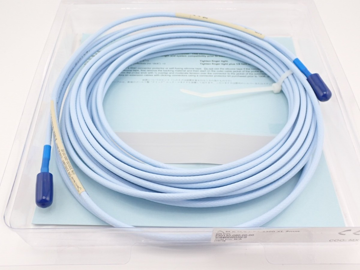
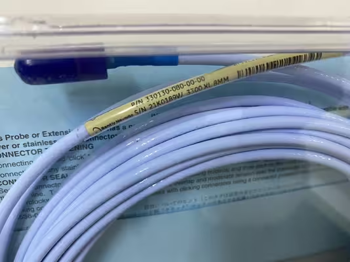
Part Number Breakdown (330130-080-00-00):
-
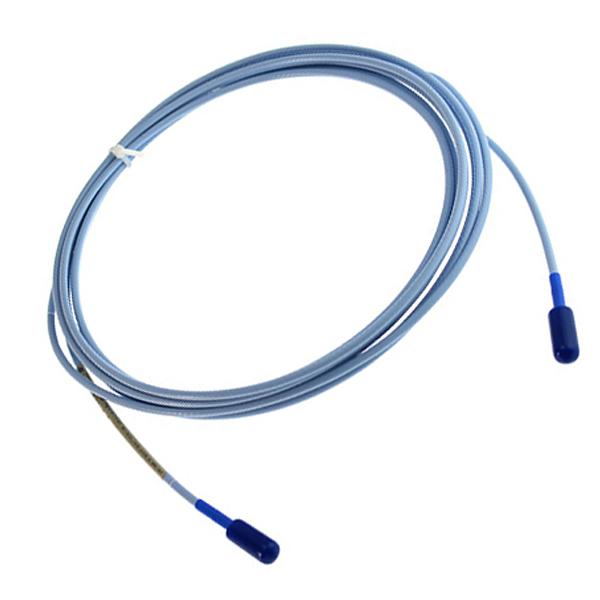
330130 – 3300 XL standard extension cable
-
-080 – Cable length: 8.0 meters
-
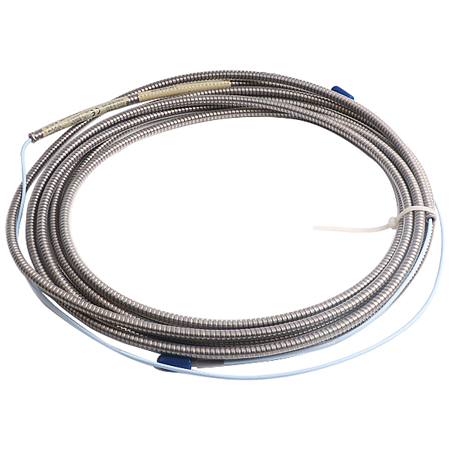
-00 – Standard cable (non-armored, no connector protector)
-
-00 – No agency approvals required
Related Product Model Recommendations
FAQs
Q1: What is the function of the 330130-080-00-00 in a 3300 XL system?
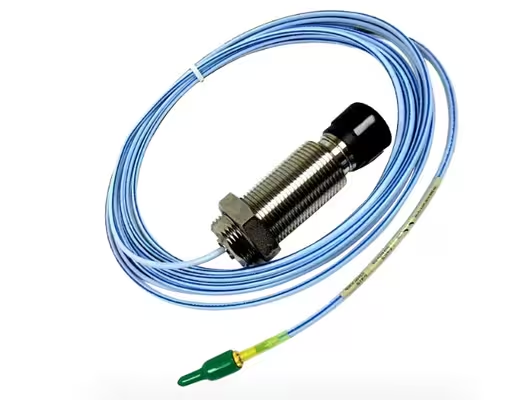
It connects a 3300 XL 8mm proximity probe to a compatible Proximitor sensor, transmitting the eddy-current displacement signal for vibration and position measurement. The extension cable is part of the calibrated electrical length of the system, ensuring accurate signal transmission without degradation .
Q2: What do the "-00" suffixes mean in the part number?
The first "-00" indicates a standard cable (non-armored, no FluidLoc technology, no connector protector). The second "-00" indicates no agency approvals are included – the cable is suitable for general-purpose industrial applications only, not hazardous areas .
Q3: How do I ensure proper system compatibility?
The total electrical length of the probe cable plus this extension cable must equal the rated system length of the Proximitor sensor. For this 8.0m cable, you would typically pair it with a 1.0m probe and a 9.0m Proximitor sensor (e.g., 330180-90-00). All 3300 XL 8mm system components are fully interchangeable without bench calibration .
Q4: Can this cable be used in high-temperature applications?
The standard 3300 XL extension cable is rated up to +177°C (350°F) continuous . For applications requiring higher temperatures, Bently Nevada offers ETR (Extended Temperature Range) cables rated up to +260°C (500°F) . The ETR cable is compatible with standard temperature probes and uses the standard 3300 XL Proximitor Sensor.
Q5: Is this cable compatible with older 3300 series components?
Yes. The 3300 XL extension cables are fully interchangeable with non-XL 3300 series 5 mm and 8 mm components, allowing flexibility for system upgrades and legacy replacements. However, system performance is limited to non-XL specifications when mixing XL and non-XL components.