Product Details
Related Product Model Recommendations
Payment & Delivery
FAQs

Q1: What is the primary function of the 1756-L75?
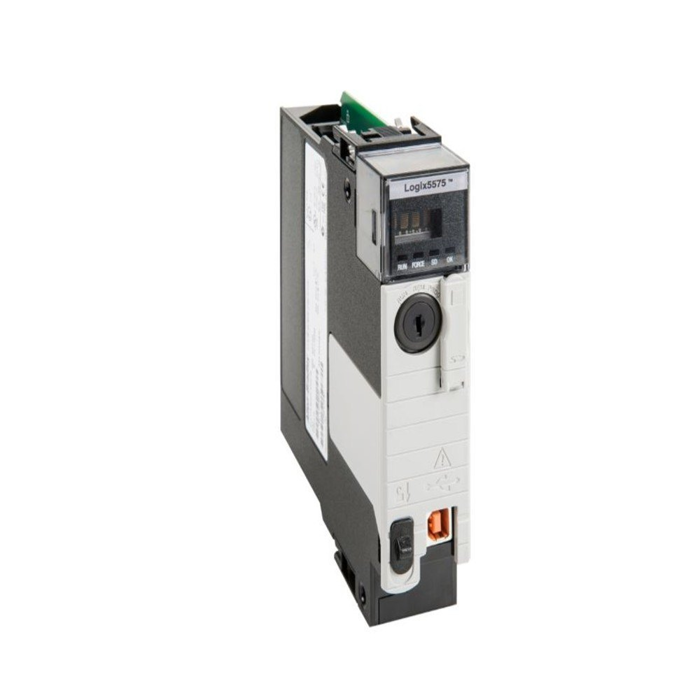
It is the highest-memory processor in the ControlLogix 5570 family, serving as the central processing unit for large-scale industrial automation systems. It executes user logic, manages I/O communication, and supports process, motion, and discrete control applications in manufacturing and process industries.
Q2: Does the 1756-L75 have a built-in Ethernet port?
No. Unlike the newer 5580 series (which features built-in 1 Gb Ethernet), the 5570 series controllers like the 1756-L75 require a separate communication module (such as 1756-EN2T, 1756-ENBT, or 1756-EN3TR) installed in the chassis for network connectivity. The controller itself has only a USB programming port.
Q3: Can the 1756-L75 be used in a redundant (ControlLogix Redundancy) system?
Yes. The 1756-L75 supports full controller redundancy when paired with the 1756-RM2 redundancy module and a second identical controller. This provides hot-standby capability for high-availability applications in process industries such as chemical, oil & gas, and water/wastewater.
Q4: What is the Energy Storage Module (ESM) and why is it important?
The ESM is a capacitor-based module (1756-ESMCAP) that replaces traditional lithium batteries for retaining RAM contents during power cycles. It eliminates battery maintenance and environmental disposal issues associated with lithium batteries. The ESM is removable and replaceable, and the controller ships with one pre-installed.
Q5: What is the difference between the 1756-L75 and the 1756-L85E?
The 1756-L75 (5570 series) is the previous-generation flagship with 32 MB memory and no embedded Ethernet port. The 1756-L85E (5580 series) is the newer generation with 40 MB memory and a built-in 1 Gb Ethernet port, plus support for 300 EtherNet/IP nodes and 256 motion axes. The L85E is the recommended replacement for the L75 in new designs.