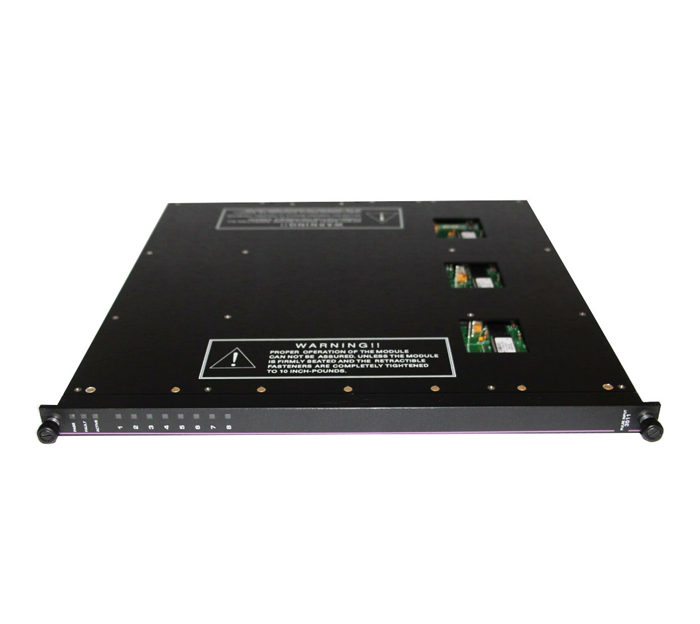
Stock New Original Triconex 3511 Pulse Input Module

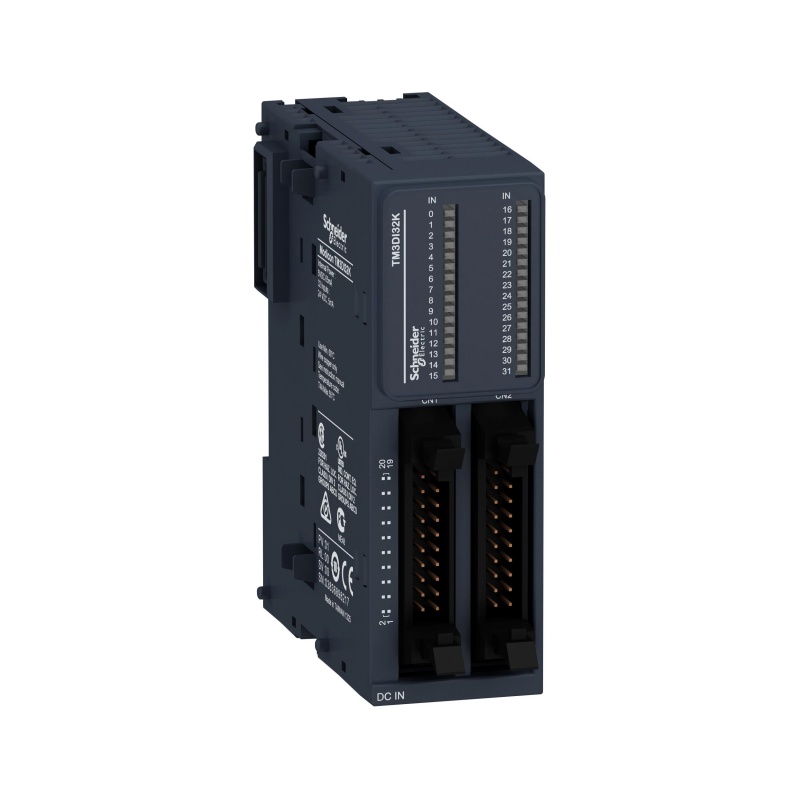
The Triconex 3511 is an 8-channel TMR Pulse Input Module for the Tricon Safety Instrumented System (SIS). The module employs Triple Modular Redundant (TMR) architecture with 2-out-of-3 (2oo3) hardware voting, ensuring that a single channel fault cannot cause a spurious trip or prevent a valid emergency shutdown.

  • Item No :

    Triconex 3511
  • Order(MOQ) :

    1 Piece
  • Payment :

    EXW/CIF
  • Product Origin :

    USA
  • Shipping Port :

    Wuhan
  • Lead Time :

    3-5days
  • Weight :

    3kg
  • Product Details


    Specification Description
    Manufacturer Triconex (Schneider Electric / Invensys) 
    Model 3511
    Product Type TMR Pulse Input (PI) Module 
    System Compatibility Tricon v9/v10/v11 Safety Controllers 
    Input Channels 8 non-commoned, AC-coupled, balanced differential 
    Input Frequency Range 20 Hz to 20,000 Hz 
    Resolution 16-bit (pulse count measured to 1 µs resolution) 
    Accuracy ±0.01% (1,000 Hz to 20,000 Hz); ±0.1% (100 Hz to 999 Hz); ±1.0% (20 Hz to 99 Hz) 
    Update Rate 25 ms typical 
    Normal Mode Range 1.5V to 200V peak-to-peak 
    Sensitivity Typical: 0.5V peak-to-peak, sine wave 
    Impedance (Load) > 8 kΩ, 20 kΩ typical 
    Common Mode Range -100V to +100V peak-to-peak 
    Over-range Protection ±150 VDC continuous 
    Isolation Rating 1500 VAC field-to-logic reinforced galvanic isolation per channel 
    Logic Power < 20 watts 
    Diagnostic Indicators Input Status LEDs (1 per point), Module Status (PASS, FAULT, ACTIVE) 
    Hot-Spare Support Yes – online replacement 
    Safety Certification IEC 61508 SIL 3, TÜV certified, ATEX Div 2 compliant 
    Operating Temperature 0°C to +60°C continuous 
    Storage Temperature -40°C to +85°C 
    Weight Approx. 0.8 kg (varies by source) 
    Dimensions 16 cm × 16 cm × 12 cm (varies by source) 
    Country of Origin USA 

    Related Product Model Recommendations


    Model Description Typical Application
    3511 (this model) 8-ch TMR Pulse Input, 20 Hz–20 kHz, AC-coupled  Standard rotational speed monitoring for turbines/compressors 
    3510 Predecessor Pulse Input Module (slower input scan)  Legacy systems requiring standard scan rates
    3511N Enhanced Pulse Input Module with faster input scan  Applications requiring faster update rates
    3512 Higher-frequency pulse variant  Applications requiring >20 kHz frequency measurement
    3515 Pulse Accumulation Module  Pulse totalizing applications (flow meters, etc.)
    9753-110 Basic Termination Panel  Required field wiring interface for 3511
    9793-110 Nonincendive Termination Panel  Hazardous area applications requiring nonincendive ratings

    FAQs

    Q1: What is the primary function of the Triconex 3511?

    It is an 8-channel TMR Pulse Input Module that acquires high-frequency pulse signals from magnetic speed sensors and pulse transmitters. It converts these signals into digital frequency/RPM values for use in overspeed protection, emergency shutdown (ESD), and critical speed monitoring applications.

    Q2: Does the 3511 support pulse totalizing?

    No. The 3511 is specifically optimized for frequency and RPM measurement, not pulse accumulation. For pulse totalizing applications (e.g., flow totalization), the 3515 Pulse Accumulation Module is required.

    Q3: What is the TMR voting architecture of the 3511?

    The 3511 uses Triple Modular Redundancy (TMR) with three independent, isolated processing legs per module. A 2-out-of-3 (2oo3) hardware voting mechanism evaluates the three raw pulse count values to determine the final validated reading. If one leg encounters a fault, the remaining two continue to provide correct data, preventing both spurious trips and dangerous failures.

    Q4: What is the difference between the 3511 and the 3510?

    The 3510 is the predecessor Pulse Input Module with a slower input scan rate. The 3511 provides a faster input scan and is the newer-generation module. The 3511N variant offers even faster scan rates.

    Q5: What common installation pitfalls should be avoided?

    Key pitfalls include: (1) Improper magnetic pickup air gap – if the gap is too wide, sine-wave amplitude drops below the 1.5Vpp trigger threshold, causing missing pulse counts; (2) Dual-end shield grounding – grounding the cable shield at both field and cabinet ends creates circulating ground loops that inject noise; ground only at the cabinet end ; (3) Using standard DI wiring – residual DC voltage saturates the AC-coupled input stage, permanently blanking pulse detection. Always use dedicated twisted shielded pulse cable.

Leave A Message
If you are interested in our products and want to know more details,please leave a message here,we will reply you as soon as we can.
Leave A Message
If you are interested in our products and want to know more details,please leave a message here,we will reply you as soon as we can.