Key Features
-
High-Temperature Operation – Continuous operation from -29°C to +204°C (-20°F to +400°F)
-
Moving-Coil Technology – Passive two-wire design requiring no external power
-
Terminal Block Connection – Top-mount terminal block (Option 03) for secure, maintenance-friendly wiring
-
Reduced Impact Sensitivity – Moving-coil design is less sensitive to impact or impulsive excitation than solid-state velocity transducers
-
Rugged Construction – Designed for reliable performance in harsh industrial environments
-
Wide Frequency Range – 10 Hz to 1000 Hz (600 to 60,000 CPM)
Technical Specifications
Suffix Code Explanation
Core Advantages
1. Purpose-Built for Extreme Heat
The 74712 is specifically engineered for environments where standard vibration sensors fail due to excessive ambient heat. With a continuous operating range up to 204°C (400°F), it is the sensor of choice for gas turbine casings, steam turbine bearing housings, and high-temperature compressor applications .
2. Passive Two-Wire Simplicity
The moving-coil design generates its own signal voltage without requiring external power . This simplifies installation, eliminates power supply wiring, and makes the sensor convenient for portable measurement applications .
3. Superior Impact Immunity
Unlike piezoelectric sensors that can produce false readings from impact events, the moving-coil design is inherently less sensitive to impulsive excitation . This makes the 74712 a reliable choice for machinery where occasional impacts or shock loads are expected.
4. Maintenance-Friendly Wiring
The top-mount terminal block (Option 03) allows field technicians to terminate existing industrial cabling directly onto the sensor body, eliminating the need for proprietary molded connectors and simplifying cable replacements in tight, high-temperature conduits .
5. Proven Reliability
The Seismoprobe family has a long track record in critical machinery protection systems. The 74712 is compatible with Bently Nevada 1900/65A monitors and 3500 series monitoring systems, as well as conventional vibration data acquisition instruments .
System Integration Notes
Two-Wire System Composition
A complete Seismoprobe measurement system consists of:
-
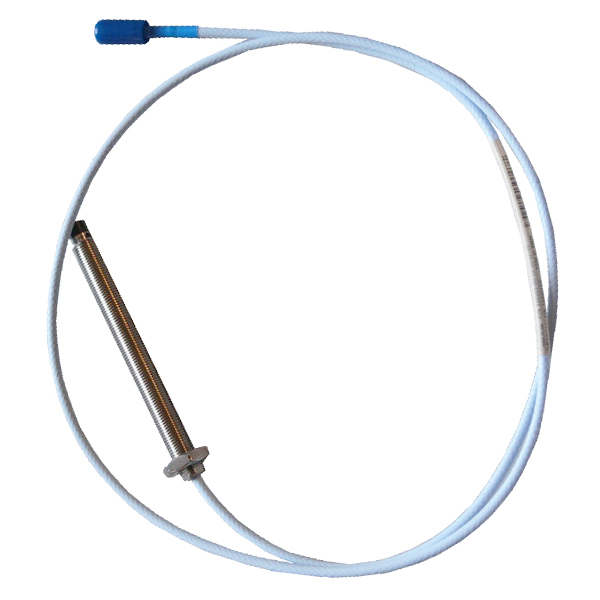
Velocity Transducer (this item) – Mounts on machine casing/bearing housing
-
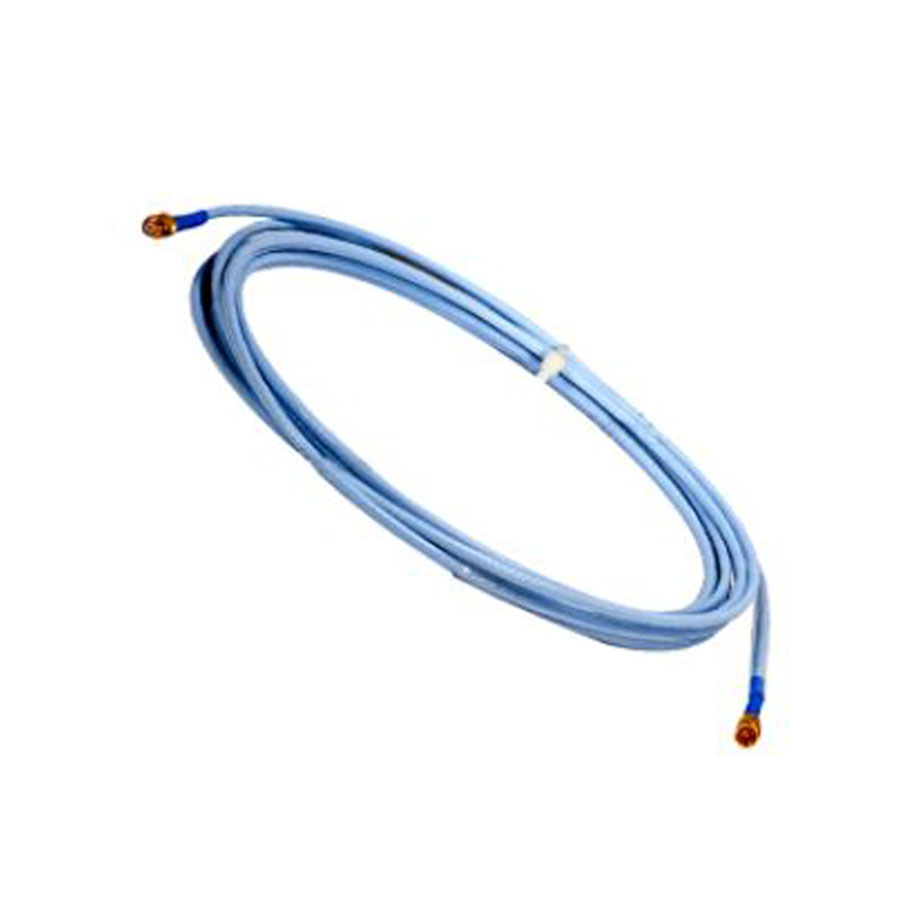
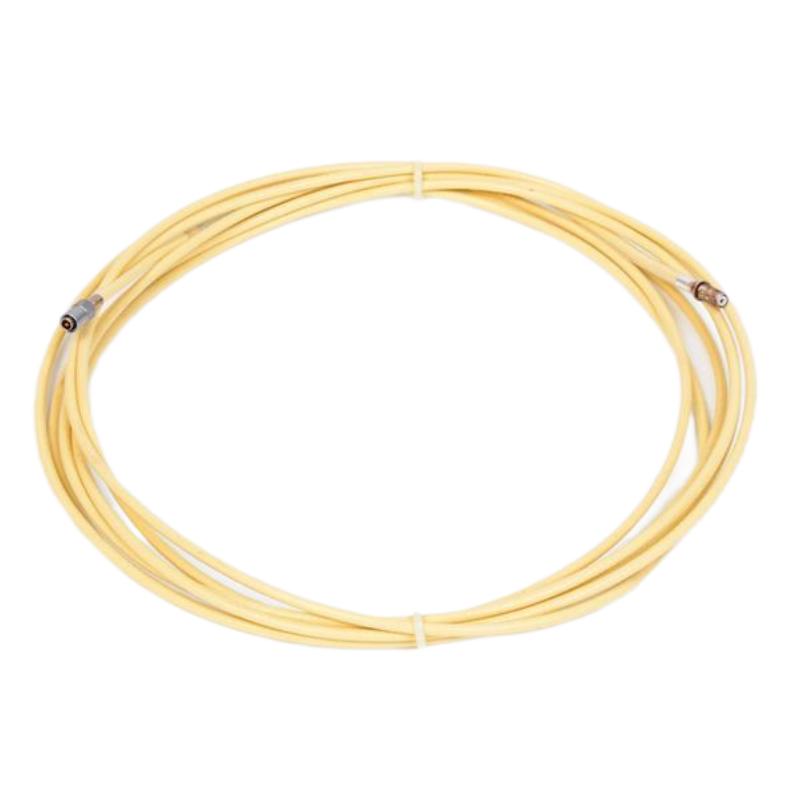
Appropriate Cable – Connects transducer to monitor or VDC (e.g., 9571 or 84661 series)
Mounting Requirements
-
Orientation: Must be mounted at 0 ±100 degrees (typically vertical or near-vertical). Mounting outside this angular tolerance will cause the internal seismic mass to drift off-center, leading to inaccurate readings and internal wear .
-
Mounting Stud: 1/2-20 UNF-3A stud, no base required .
Cable Recommendations
-
Maximum cable length: 305 meters (1,000 feet) without signal attenuation
-
For environments with electromagnetic interference or high temperature, armored cables are recommended
-
Compatible cable types: 9571 (0.6–30 m) and 84661 (0.9–30 m)
Applications
The 74712-06-05-03-00 is deployed across critical high-temperature rotating machinery applications:
Primary Measurement Functions
-
Absolute Vibration (Relative to Free Space) – Bearing housing, casing, or structural vibration measurement
-
Condition Monitoring – Detecting structural imbalance, mechanical looseness, and bearing degradation
What's Included
Note: Connecting cable (9571 or 84661), monitor/VDC, and mounting hardware are sold separately.
Why Buy From Us?
-
In Stock – ready to ship same/next business day
-
Fast Shipping – expedited shipping options available
-
Fully Tested – each unit verified for functionality
-
Warranty Included – purchase with confidence
-
Technical Support – integration assistance available
Frequently Asked Questions (FAQ)
Q1: What is the Bently Nevada 74712-06-05-03-00?
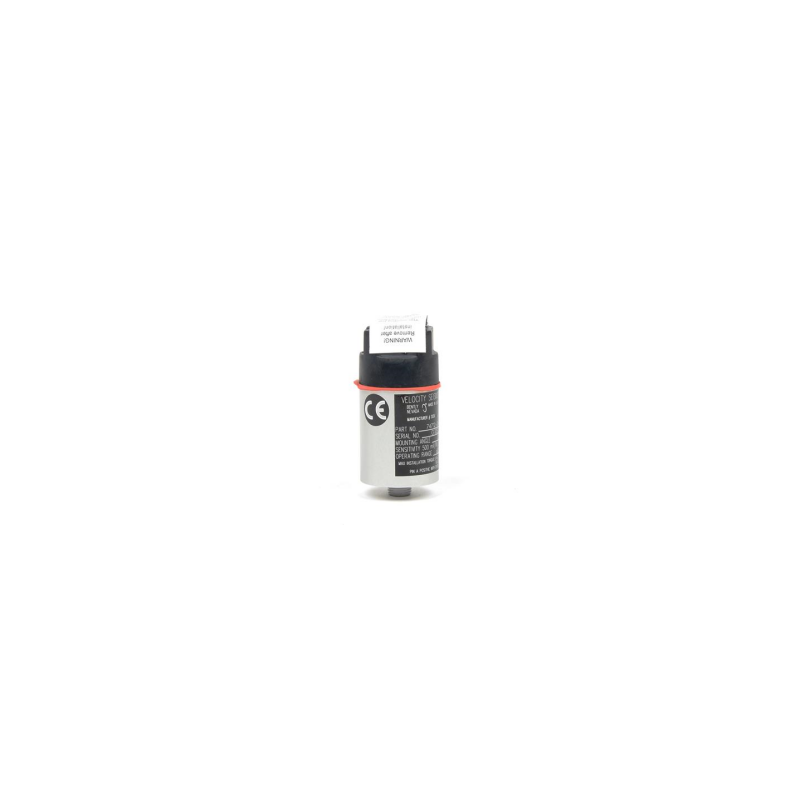
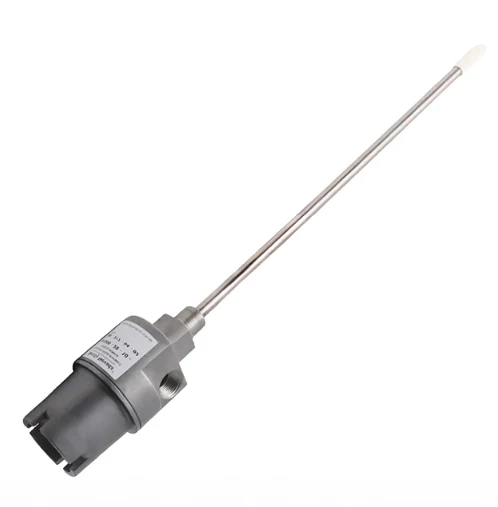
It is a high-temperature, two-wire Seismoprobe velocity transducer used for absolute vibration measurement on bearing housings, machine casings, and structural components in demanding thermal environments. It is the high-temperature version of the 9200 Seismoprobe .
Q2: What does each suffix in the part number mean?
06 = Mounting angle 0 ±100 degrees, minimum frequency 10 Hz; 05 = No base, 1/2-20 UNF-3A stud mounting; 03 = Top-mount terminal block connector; 00 = No agency approval required .
Q3: What is the maximum operating temperature?
The transducer operates continuously from -29°C to +204°C (-20°F to +400°F) .
Q4: Does this sensor require external power?
No. The 74712 uses moving-coil technology that generates its own voltage output proportional to vibration velocity. It requires no external power supply .
Q5: What is the sensitivity and frequency response?
Sensitivity is 20 mV/mm/s (500 mV/in/s) ±5%. Frequency response is 10 Hz to 1000 Hz (600 to 60,000 CPM) with +0, -3 dB typical .
Q6: What mounting orientation is required?
The sensor must be mounted at 0 ±100 degrees (typically vertical or near-vertical). Mounting outside this angular tolerance will cause inaccurate readings and internal wear .
Q7: What is the difference between the 74712 and the 9200?
The 74712 is the high-temperature version of the 9200 Seismoprobe. The 9200 is designed for standard ambient temperature environments, while the 74712 extends the operating range to 204°C for gas turbines, steam turbines, and other high-heat applications .
Q8: What cable types are compatible?
The transducer is compatible with 9571 and 84661 series connecting cables. Armored cables are recommended for environments with electromagnetic interference or high temperature .
Q9: What is the maximum cable length?
Maximum cable length is 305 meters (1,000 feet) without signal attenuation .
Q10: Can this sensor be used for portable measurements?
Yes. Because it requires no external power, the 74712 is convenient for portable measurement applications .
Q11: What monitoring systems is this transducer compatible with?
It is compatible with Bently Nevada 1900/65A vibration monitors, 50 series monitoring systems, and conventional industrial vibration data acquisition instruments .
Q12: Is this sensor suitable for hazardous areas?
This specific variant (suffix 00) has no agency approval for hazardous areas. If hazardous area certification is required, select a variant with the appropriate agency approval suffix .