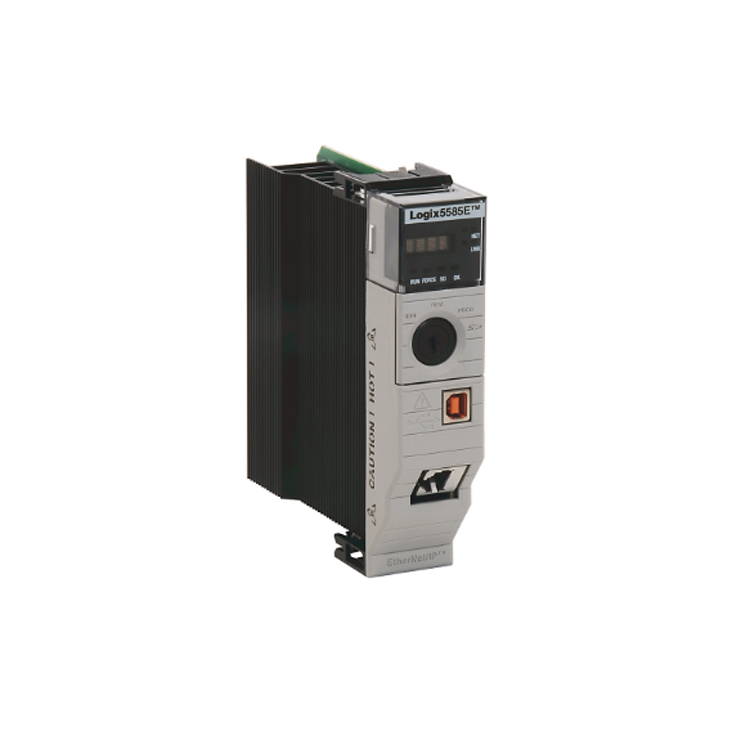
Products Description
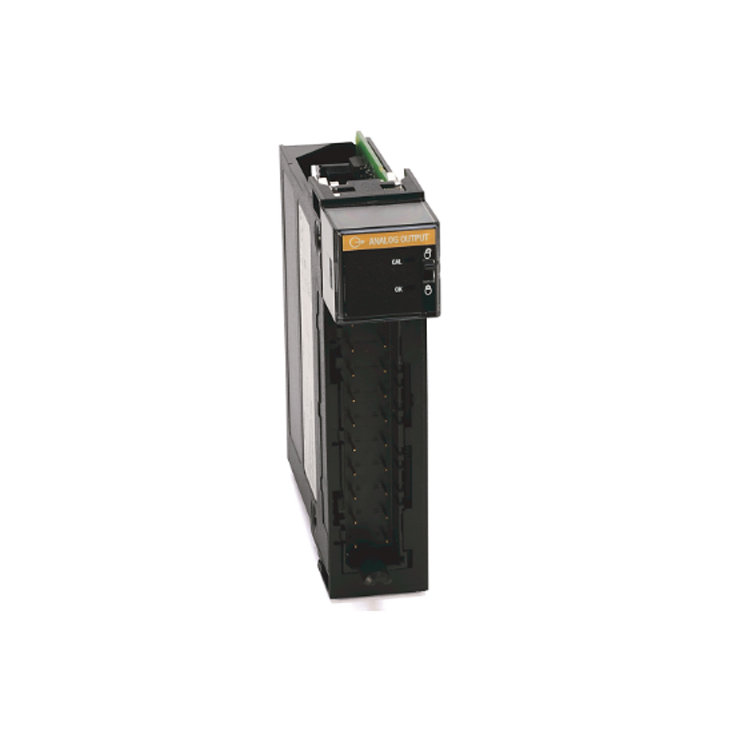
Allen-Bradley 1756-OB32 ControlLogix 10-31VDC Output Module, 32 Points (36 Pin) is an output module that provides ON/OFF detection and actuation. Each 1756-OB32 module maintains specific identification information that separates it from all other modules. The 1756OB32 module mounts in a ControlLogix?chassis and uses a Removable Terminal Block (RTB): 1756-TBCH or 1756-TBS6H, or an Interface Module (IFM) to connect all field-side wiring.
| Model Number |
1756-OB32 |
| Place of Origin |
USA |
| Dimension/Weight |
0.5 kg |
| Condition |
new and original |
| Warranty |
1 year |
Shipping term
|
DHL Fedex TNT EMS UPS |
| Payment |
TT / Western Union |
| Delivery Time |
3-5 days |
Service
|
24 Hours Online Service |
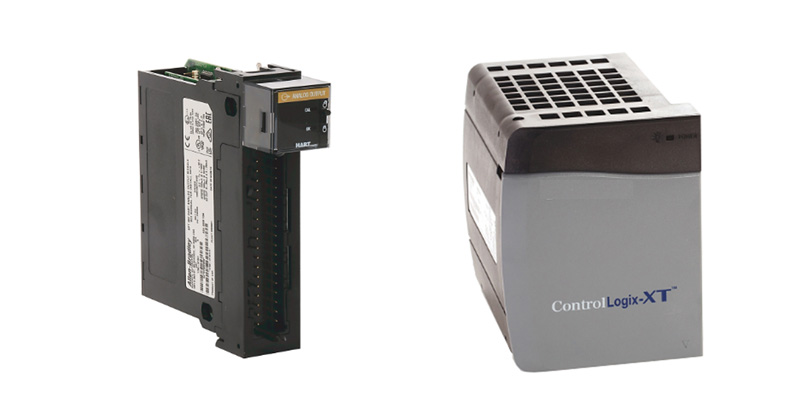
Key Parameters
Core Features & Advantages
-
High-Density, Space-Saving Design: The module's standout feature is its ability to pack 32 output points into a single slot, optimizing valuable chassis space and reducing overall system cost for applications with high discrete output counts .
-
Wide Voltage Range and Sourcing Output: With an operating voltage range of 10-31.2V DC, the module provides flexibility to work with various 12V and 24V DC field devices. It is a sourcing (source-type) output module, meaning it supplies the positive DC voltage to the load .
-
Seamless ControlLogix Integration: As a native 1756-series module, it installs directly into the ControlLogix chassis and is fully integrated with the Studio 5000 environment, providing seamless configuration and diagnostics . It offers point-level output fault states, configurable on a per-point basis for fail-safe operation .
-
Robust Design for Industrial Environments: The module offers 250V continuous isolation to protect the backplane from field-side transients and noise . It is rated for a wide operating temperature range of 0-60°C and is certified for hazardous locations (Ex ec IIC T4 Gc) .
Typical Applications
The 1756-OB32 is widely used for high-density actuation of digital loads in various industries, including:
-
Factory Automation: Controlling solenoids, relays, and indicator lamps in conveyor systems, packaging machines, and assembly lines .
-
Process Control: Actuating valves, contactors, and alarms in process monitoring and control applications .
-
Machine Control: Interfacing with pilot lights, motor starters, and other discrete output devices in manufacturing equipment.
FAQ
Q1: How many output points does the 1756-OB32 provide, and what type of load does it support?
A: It provides 32 digital output points. It is a sourcing (source-type) output module, meaning it supplies the positive DC voltage to the load. The load should be connected between the output terminal and the common (DC COM).
Q2: What are the voltage and current ratings of this module?
A: The output voltage range is 10–31.2V DC, with a nominal rating of 12/24V DC. Each output point is rated for 0.5 A at 50°C, with the module's total current capacity being 16 A at 50°C (derating to 10 A at 60°C).
Q3: What removable terminal block (RTB) is compatible with the 1756-OB32?
A: It is compatible with the 36-pin 1756-TBCH (screw-clamp) or 1756-TBS6H (spring-clamp) terminal blocks.
Q4: The output LED is ON, but there is no voltage at the output terminal. What could be the cause?
A: This indicates that the module's output image table is correct, but the internal output transistor is not conducting. Common causes include: a damaged internal output transistor (especially when driving inductive loads), a blown fuse on that channel, or an open circuit in the wiring to the load.
Q5: Why does one output channel stay at 24V DC even when no program instruction is active and the LED is OFF?
A: This is typically caused by voltage spikes from inductive loads (such as solenoids or relays) that have damaged the MOSFET output transistor, causing it to fail short. A highly effective solution is to install a freewheeling diode (flyback diode) in parallel with the load coil to absorb the surge.
Q6: All output channels measure 0–12V in the OFF state, causing connected indicator lights to glow dimly. How can I fix this?
A: This is due to a small leakage current (maximum 0.5 mA) inherent to the 1756-OB32 module. If the load is an LED indicator or solid-state relay (SSR), this current can cause a faint glow. The solution is to connect a bleeder resistor (also called a "dummy load") in parallel with the output to provide an additional path for the leakage current.
Q7: After replacing a new module, the same channel fails again within a few weeks. What is the issue?
A: This indicates that the external circuit is the root cause of the failure. The new module is only temporarily able to withstand the stress. Check the load connected to that channel—the inrush current may be too high, or surge suppression measures may be insufficient. It is strongly recommended to add an interposing relay to this channel or ensure that proper surge suppressors are installed across the load.