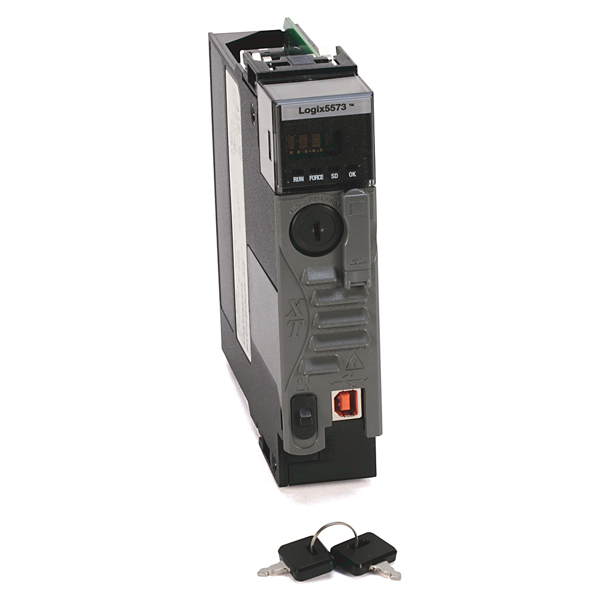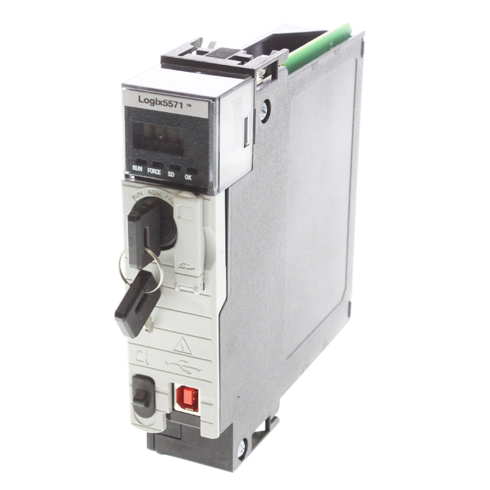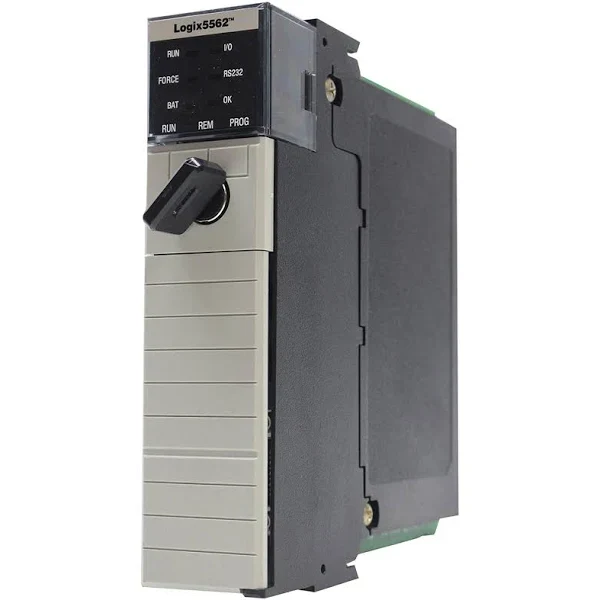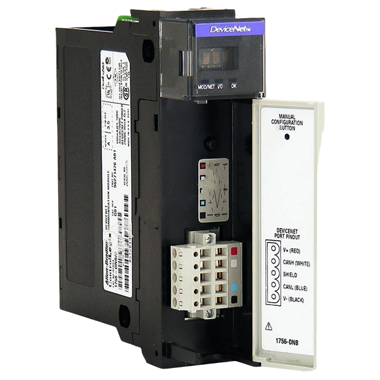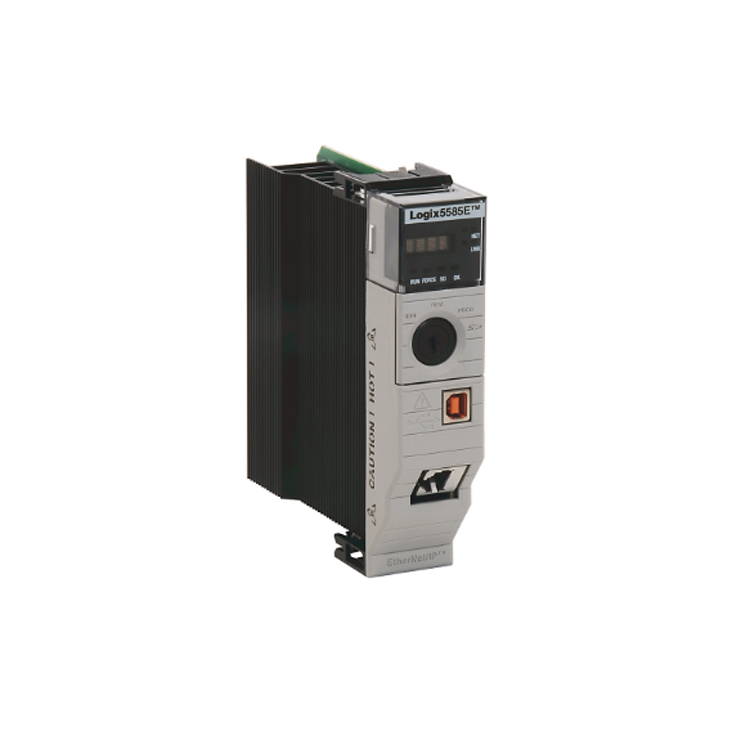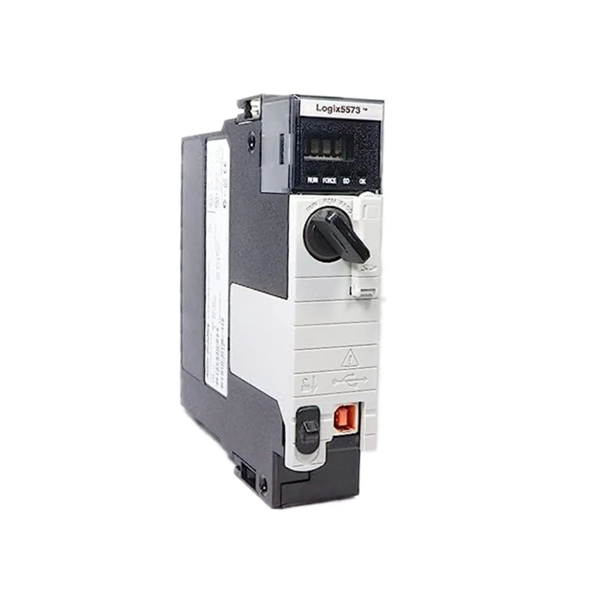
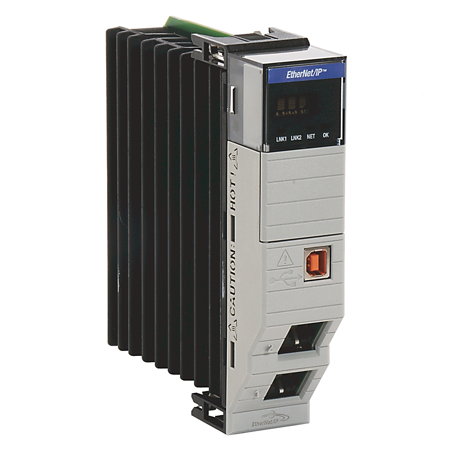
Allen-Bradley 1756-L73 ControlLogix CPU Logix5673 Processor with 8 Mbytes Memory

The Allen-Bradley 1756-L73 is a ControlLogix 5570 series programmable automation controller (PAC) from Rockwell Automation. Featuring 8 MB of user memory, a built-in USB programming port, and support for up to 100 motion axes, this mid-range controller is engineered for medium-to-large industrial automation applications. Part of the mature 5570 platform, it provides a common control engine and development environment for discrete, process, motion, and drive applications. Program retention is maintained via an Energy Storage Module (ESM) that must be ordered separately.

  • Item No :

    1756-L73
  • Order(MOQ) :

    1
  • Payment :

    EXW
  • Product Origin :

    USA
  • Shipping Port :

    Wuhan
  • Lead Time :

    3-5days
  • Weight :

    3KG
  • Product Details

    General Information


    Attribute Specification
    Manufacturer Allen-Bradley / Rockwell Automation
    Product Type ControlLogix 5570 PAC (Programmable Automation Controller)
    Catalog Number 1756-L73
    Series ControlLogix 5570 (L7x)
    User Memory 8 MB 
    Motion Axes Supported Up to 100 

    Memory & Non-Volatile Storage


    Parameter Specification
    On-board Memory 8 MB user memory 
    Non-Volatile Storage Option Secure Digital (SD) card 
    Program Retention Energy Storage Module (ESM) required (ordered separately) — 1756-ESMCAP 

    Communication Ports


    Interface Description
    Built-in Programming Port 1 x USB port (local programming and online edits only) 
    Expansion Interfaces Ethernet/IP, ControlNet, DeviceNet, Data Highway Plus, Remote I/O, SynchLink — all require separate 1756 communication modules 

    Physical & Environmental


    Parameter Specification
    Mounting ControlLogix chassis (1756 series) 
    Display 4-character alphanumeric scrolling status display 
    Replacement Battery 1756-ESMCAP (ESM) 
    Conformal Coating Variant "K" suffix indicates conformal coating for harsh environments (e.g., 1756-L73SK) 

    Recommended Alternative Models


    Model Number Description Key Differences
    1756-L72 ControlLogix 5570, 4 MB user memory Lower memory capacity; same platform and feature set 
    1756-L74 ControlLogix 5570, 16 MB user memory Higher memory capacity (16 MB) for larger applications 
    1756-L71 ControlLogix 5570, 2 MB user memory Entry-level 5570 processor; lower memory and motion axis capacity 
    1756-L73S GuardLogix 5573S, 8 MB standard + 4 MB safety memory Safety-rated version for functional safety applications (SIL 2/PLd, SIL 3/PLe) 
    1756-L73SK GuardLogix 5573S with conformal coating Safety-rated variant with protective coating for harsh environments; same 8M standard + 4M safety memory 
    1756-L8x series (e.g., L81E, L82E) ControlLogix 5580 current generation Newer platform; higher performance; longer lifecycle; requires project migration in Studio 5000 

    FAQs

    1: What is the difference between the standard 1756-L73 and the 1756-L73S?

    A: The standard 1756-L73 is a traditional programmable automation controller (PAC) for standard automation applications. The 1756-L73S is a GuardLogix safety-rated controller that provides 8 MB standard memory plus 4 MB safety memory and supports functional safety up to SIL 3/PLe . They are not interchangeable; safety applications require the -S variant.

    2: Does the 1756-L73 support controller redundancy?

    A: Yes, the 1756-L73 supports redundant controller configurations within compatible ControlLogix 5570 redundancy architectures. However, this requires a matched second 1756-L73 unit, compatible redundancy modules, a second synchronized chassis, and a properly configured redundancy project in Studio 5000. Both units must run matched firmware — this is not a plug-and-add function.

    3: Can I simply swap a 1756-L71 or L72 for a 1756-L73?

    A: Direct swap is possible but requires careful verification. When replacing an L71/L72 with an L73, ensure firmware versions match and the project file is properly transferred. However, certain configuration data — such as absolute encoder references and motor database parameters for Kinetix servo axes — may not transfer completely . This can cause position mismatch and homing anomalies. Always verify axis status tags and use the Compare Utility in Studio 5000 to confirm all parameters are correctly migrated.

Leave A Message
If you are interested in our products and want to know more details,please leave a message here,we will reply you as soon as we can.
Leave A Message
If you are interested in our products and want to know more details,please leave a message here,we will reply you as soon as we can.