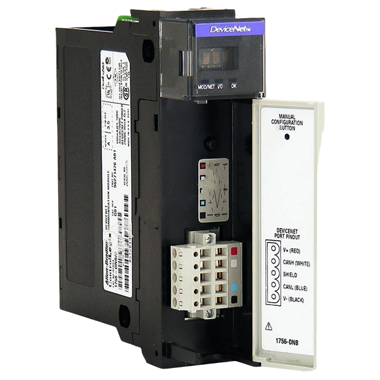

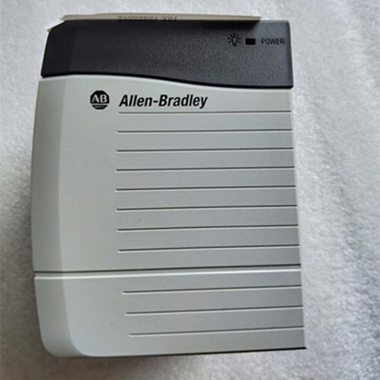
Allen Bradley 1756-DNB ControlLogix DeviceNet Bridge/Scanner Module

The Allen‑Bradley 1756‑DNB is a DeviceNet Bridge/Scanner Module for the ControlLogix® platform that interfaces between DeviceNet devices and the ControlLogix controller. It acts as a scanner on the DeviceNet network, collecting I/O data from up to 64 slave devices and mapping it into the controller's tag database.

  • Item No :

    1756-DNB
  • Order(MOQ) :

    1 Piece
  • Payment :

    EXW
  • Product Origin :

    USA
  • Shipping Port :

    Wuhan
  • Lead Time :

    3-5days
  • Weight :

    3KG
  • Product Details


    Specification Description
    Manufacturer Rockwell Automation (Allen‑Bradley)
    Model 1756‑DNB
    Product Family ControlLogix
    Product Type DeviceNet Bridge/Scanner Communication Module 
    Number of Channels
    Max Nodes Supported 64 
    Data Capacity Up to 124 input words and 123 output words (32‑bit) 
    Communication Rates 125 Kbps (500 m max), 250 Kbps (250 m max), 500 Kbps (100 m max) 
    Backplane Current Draw 400 mA @ 5.1V DC; 0 mA @ 24V DC 
    DeviceNet Current Draw 60 mA @ 24V DC 
    Power Dissipation 3.5 W (11.9 BTU/hr) 
    Isolation Voltage 50V continuous (basic insulation); tested at 853V AC @ 60s between DeviceNet network and backplane 
    Operating Temperature 0°C to +60°C 
    Storage Temperature -40°C 
    Module Location Any slot in ControlLogix chassis 
    Configuration Software RSLogix 5000 / Studio 5000; RSNetWorx for DeviceNet 
    Diagnostics 4‑character display and LED indicators (MOD/NET, I/O) 
    Key Features Automatic Device Replacement (ADR), Auto Address Recovery (AAR), Configuration Recovery (CR), RIUP, slave mode, flash firmware upgradeable, Quick Connect 

    Related Product Model Recommendations


    Model Description Typical Application
    1756‑DNB/A, /C, /D Revision variants of the same module Different firmware/hardware revisions 
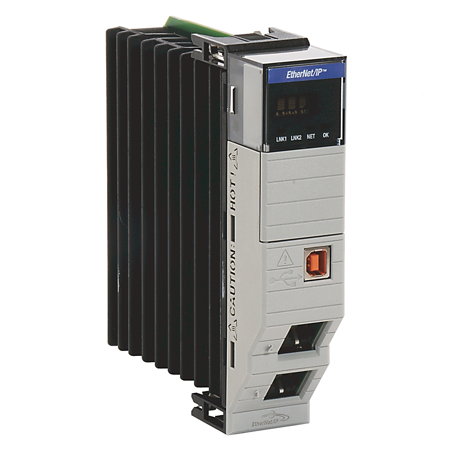
    1756‑EN2T EtherNet/IP communication module Adding EtherNet/IP connectivity
    1756‑CN2R ControlNet communication module (redundant) ControlNet network integration
    1756‑DHRIO Data Highway Plus/Remote I/O module Legacy DH+ network connectivity 
    1756‑EWEB Embedded web server module Web-based monitoring and diagnostics 
     
    1756-A10 1794-IE8XT 1769-IF4I
    1756-A13 1794-IF2XOF2I 1769-IF4XOF2
    1756-A17 1794-IF4I 1769-IF8
    1756-A4 1794-IF8IH 1769-IG16
    1756-A7 1794-IG16 1769-IM12
    1756-BA1 1794-IH16 1769-IQ16
    1756-BA2 1794-IJ2 1769-IQ16F
    1756-BATA 1794-IM16 1769-IQ32
    1756-BATM 1794-IM8 1769-IQ32T
    1756-CFM 1794-IP4 1769-IQ6XOW4
    1756-CN2 1794-IR8 1769-IR6
    1756-CN2R 1794-IRT8 1769-IT6
    1756-CNB 1794-IRT8K 1769-OA16


    Payment & Delivery

    FAQs

    Q1: What is the primary function of the 1756‑DNB?

    It serves as a DeviceNet scanner, collecting I/O data from up to 64 DeviceNet slave devices and mapping that data into the ControlLogix controller's tag database . It can also function as a gateway to bridge data between DeviceNet and other CIP networks .

    Q2: What communication rates does the 1756‑DNB support?

    The module supports three baud rates: 125 Kbps (maximum cable length 500 m), 250 Kbps (250 m), and 500 Kbps (100 m) .

    Q3: What is ADR (Automatic Device Replacement) and how does it work?

    ADR is a feature that allows a replacement DeviceNet device to be automatically configured with the same node address and parameters as the failed unit. The 1756‑DNB with 1 MB memory supports both Auto Address Recovery (AAR) and Configuration Recovery (CR) – when a device fails, simply replace it with a new one and the scanner will reprogram it automatically .

    Q4: What configuration tools are required for the 1756‑DNB?

    The module is configured using RSLogix 5000 / Studio 5000 for chassis integration and RSNetWorx for DeviceNet for scanlist and I/O mapping . EDS files may need to be registered for unrecognized devices .

    Q5: Is the 1756‑DNB suitable for safety applications?

    Yes. The module is marked "Suitable for safety functions" and supports DeviceNet Safety protocol . However, the specific safety application must be properly designed and certified per relevant standards.

Leave A Message
If you are interested in our products and want to know more details,please leave a message here,we will reply you as soon as we can.
Leave A Message
If you are interested in our products and want to know more details,please leave a message here,we will reply you as soon as we can.